
Advocates urge Alaska to adopt Medicaid self-direction so participants can hire and manage their own caregivers
Get AI-powered insights, summaries, and transcripts
Subscribe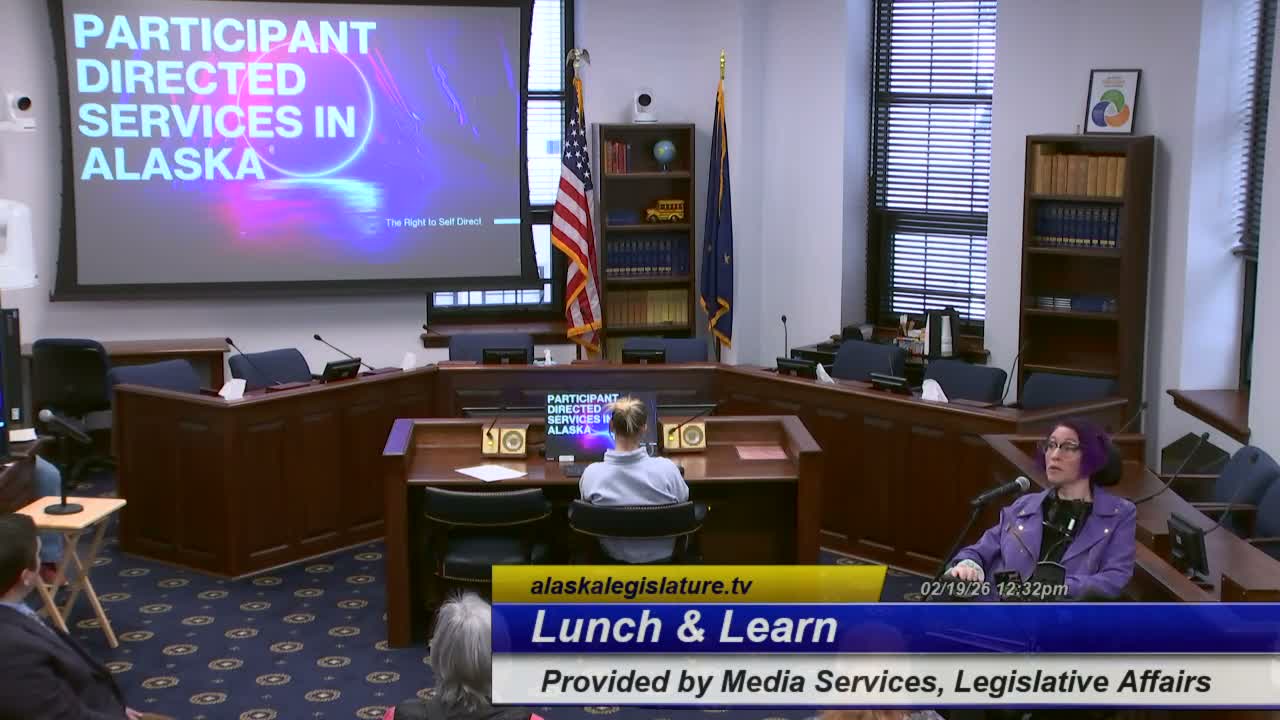
Summary
Maggie Winston and Center directors argued Alaska remains the only state without a Medicaid self-direction program and outlined steps—including technical assistance, a March 24 community leaders training, and community forums—to design a participant-directed model building on the existing VA-funded VOICE program.
At a Soldotna lunch-and-learn, Maggie Winston, a co-director within Alaska's Independent Living Network, urged lawmakers and local leaders to develop a Medicaid-funded self-direction program that would let participants and their representatives recruit, hire and manage their own caregivers while keeping financial-management supports in place.
Maggie and a video shown during the session described self-direction as a long-term-care model that gives people choice and control: examples in the video included a long-term-care recipient who could hire a relative and another who used purchased goods (adaptive appliances) to reduce staff hours. Presenters emphasized that built-in supports exist in self-direction models (information and assistance, financial-management services, and family or representative support) so participants are not simply given cash with no oversight.
Speakers said Alaska is currently the only U.S. state without a Medicaid self-direction program, while more than 1.5 million Americans self-direct services elsewhere. The VOICE program, funded by the U.S. Department of Veterans Affairs and operating in Alaska for roughly a decade, was cited as an in-state model: presenters said VOICE serves about 200 veterans across the Kenai Peninsula, Southeast, Mat-Su and Fairbanks and shows self-direction can work in rural communities.
Maggie outlined next steps: ongoing planning meetings with technical-assistance contractors (including a national applied-self-direction agency), a Community Leaders training scheduled for March 24 that will invite ADRCs, aging and disability resource centers, developmental-disability resource centers and independent living centers, and forthcoming community forums to educate potential participants and providers.
During questions, Maggie acknowledged provider concerns that self-direction could create competition for agency-based providers but said evidence from other states shows no systemic collapse of provider agencies. Eric Gurley, executive director of Access Alaska, told the group his organization provides consumer-directed personal care and welcomed a Medicaid self-direction program as especially helpful for retaining workforce in rural communities so people can remain in their home areas.
Presenters framed self-direction as both a practical solution to service shortages and a civil-rights issue about access to choice and community living. No formal legislative action was taken at the session; organizers requested continued engagement from local leaders and providers as they build program details.