Get email alerts on the Transit Funding Taskforce topic
No spam. Unsubscribe anytime.
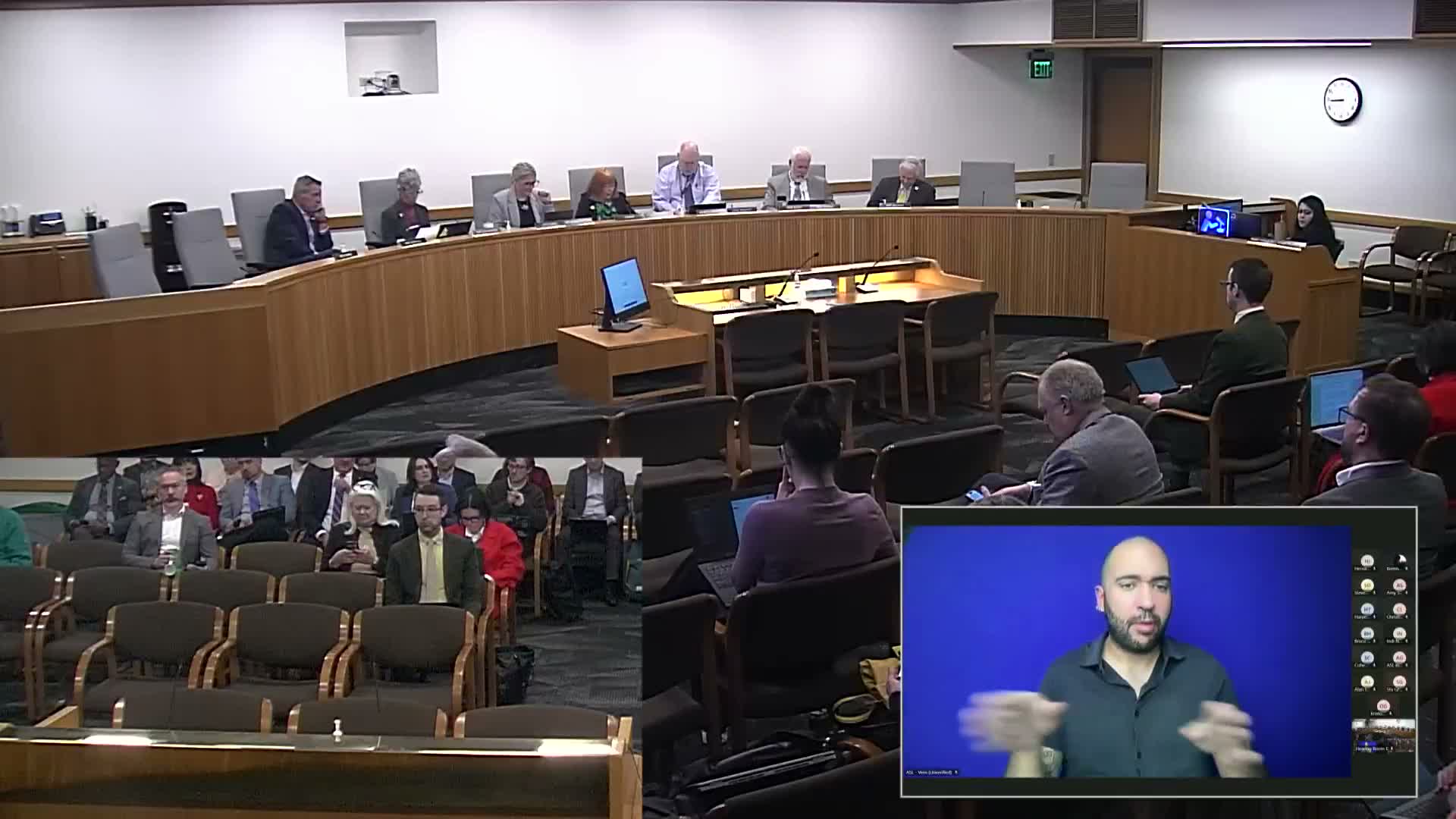
Broad support and sharp debate as committee hears transit funding task force bill
Summary
House members heard wide support for HB 4008 to create a transit funding task force amid warnings of deep service cuts and debate over whether the task force should examine fare recovery, EV bus costs and local taxing options; stakeholders urged data-driven, equity-centered recommendations before 2027.
Lawmakers heard a broad cross-section of transit agencies, labor, health-care and community groups urging passage of House Bill 4008 to create a bipartisan transit funding task force tasked with identifying sustainable revenue mechanisms.
Drew Hagedorn of the Oregon Transit Association said the dash-1 amendment would help form a balanced panel of legislators and stakeholders "to identify a fair mechanism" to support transit statewide. Julie Brown, representing Rogue Valley Transit, said RVTD recently cut service by 40% and that 70% of its riders do not own a vehicle; she urged the committee to assemble the data necessary for durable funding decisions.
TriMet warned of immediate impacts: JC Veneta, TriMet’s chief public affairs officer, said the agency must cut at least 10% of service beginning in August and prepare deeper cuts next fall without additional funding. "This loss of transit service will severely impact the 35% of TriMet riders who are transit dependent," Veneta said.
Union and rural representatives echoed the urgency. Bruce Hanson, president of Amalgamated Transit Union Local 757, called stable funding essential to maintaining service and transit-worker jobs. Several rural operators described recent ridership gains and fragile reserves, saying reduced STIF allocations will force additional service reductions.
The bill drew mixed responses from business and policy groups. Representative Shelley Bossert Davis proposed a dash-2 amendment to expand the task force scope to study fare-box recovery, the lifecycle costs of battery-electric buses and their pavement impacts, and the implications of allowing local taxing options rather than a statewide payroll tax. Cascade Policy Institute urged higher fare-box recovery ratios, while Oregon Business & Industry said the bill should include demand/utilization analyses and prioritization.
The committee closed public testimony without voting and moved briefly into a work session to clarify a dash-3 photo-radar amendment on a different bill; Erin Knott of the Oregon Judicial Department explained centralization and adjudication procedures for photo-radar violations. Several items and work sessions, including HB 4007 and a photo-radar bill, were rolled over to the next meeting to allow members time to review fiscal analyses and late amendments.
Next steps: The committee rolled over work on several agenda items and urged members to review posted amendments before reconvening.
AI generated
The text on this page is AI generated. Summaries, highlights, analysis, and video transcripts are all produced from the original source material.
AI can make mistakes, so if you spot one, and we will fix it for everyone.
Note: the source content is unaltered by us. Any content source we link to, be it a video, an audio recording, or a document, is presented exactly as its publisher released it. That publisher is usually a government body, sometimes an individual official or another organisation.