
Commissioner and conservation groups praise wildfire restoration, warn against diverting Climate Commitment Act funds
Get AI-powered insights, summaries, and transcripts
Subscribe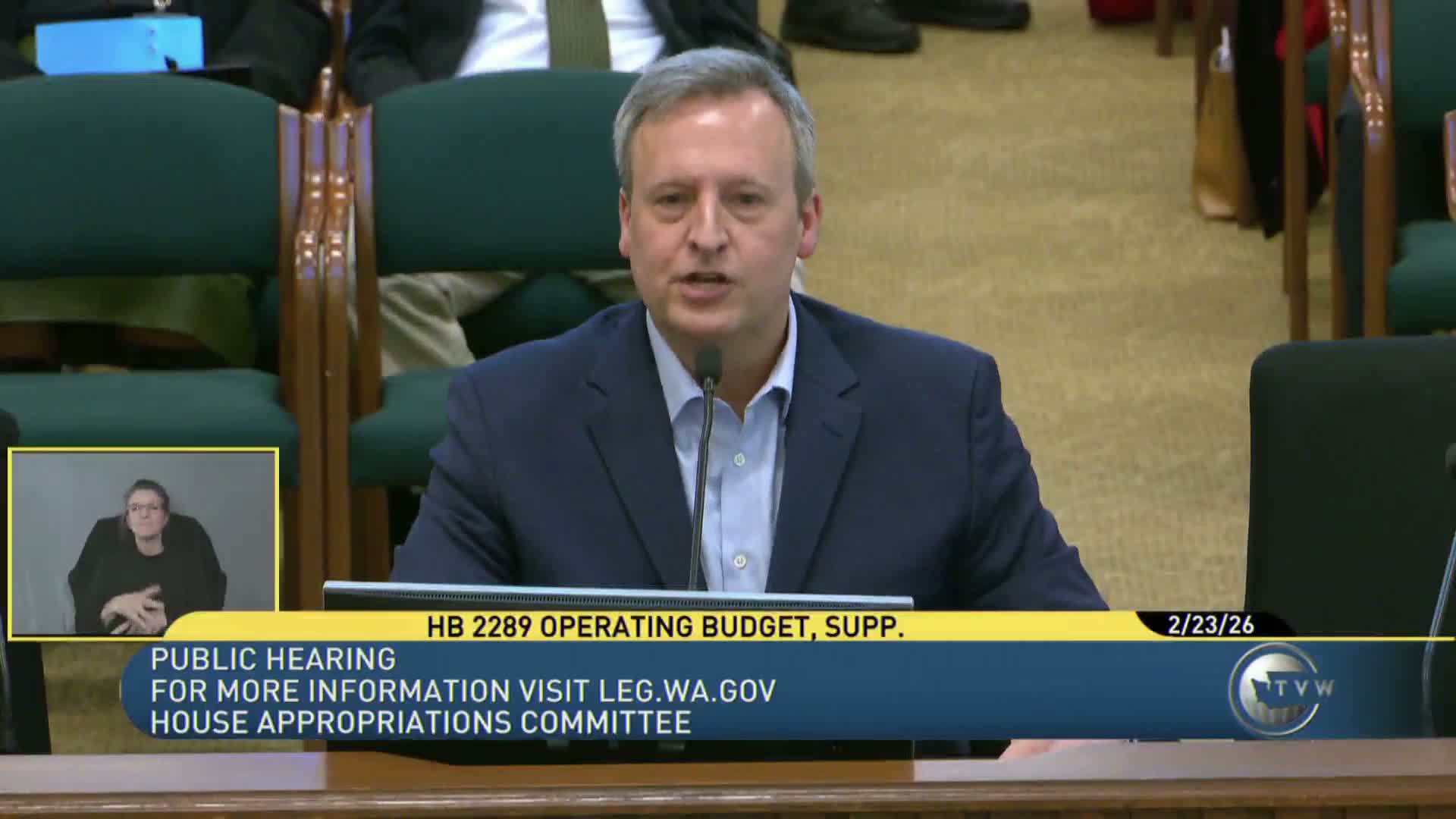
Summary
Washington Commissioner of Public Lands and conservation groups praised restored wildfire prevention funding but warned the House proposal’s use of Climate Commitment Act and LEHI surplus funds in lieu of general fund to cover other items could jeopardize environmental justice and climate programs and reduce capacity at DNR recreation sites.
Dave Upley Grove (transcript name "Dave Upley Grove"), identified in testimony as Washington State Commissioner of Public Lands, thanked the committee for restoring wildfire prevention and preparedness funding as envisioned by House Bill 1168 (as referenced in testimony) and called the restoration "a big deal and a bright spot in a very difficult budget year." Grove also urged reconsideration of deep general‑fund cuts to the Department of Natural Resources, warning that reductions to environmental justice and HEAL Act compliance work could prevent the agency from meeting legal mandates and curtail access at up to 19 recreation sites, forcing the closure of 11 sites.
Conservation groups and wildfire partners reinforced the message: the Nature Conservancy and Washington Forest Protection Association praised the restoration of forest health and wildfire response funding—one witness cited a recent example where a fire line paid for with CCA funds held during a large fire—while several environmental justice and climate advocates asked that Climate Commitment Act (CCA) funds used for one‑time NGFO relief be repaid and prioritized for pollution‑reducing investments that produce long‑term benefits.
Multiple testifiers emphasized repayment mechanisms described in the briefing—use of LEHI 1 surplus and other transfers to reconcile CCA usage—and urged that any transfers be repaid and ring‑fenced so that long‑term climate and environmental justice work is not undercut.
What happens next: Committee negotiators will weigh one‑time transfers against programmatic commitments; advocates will seek formal protections or repayment language in the final package.