
Education groups warn cuts to transition‑to‑kindergarten, LEA and running‑start will widen inequities
Get AI-powered insights, summaries, and transcripts
Subscribe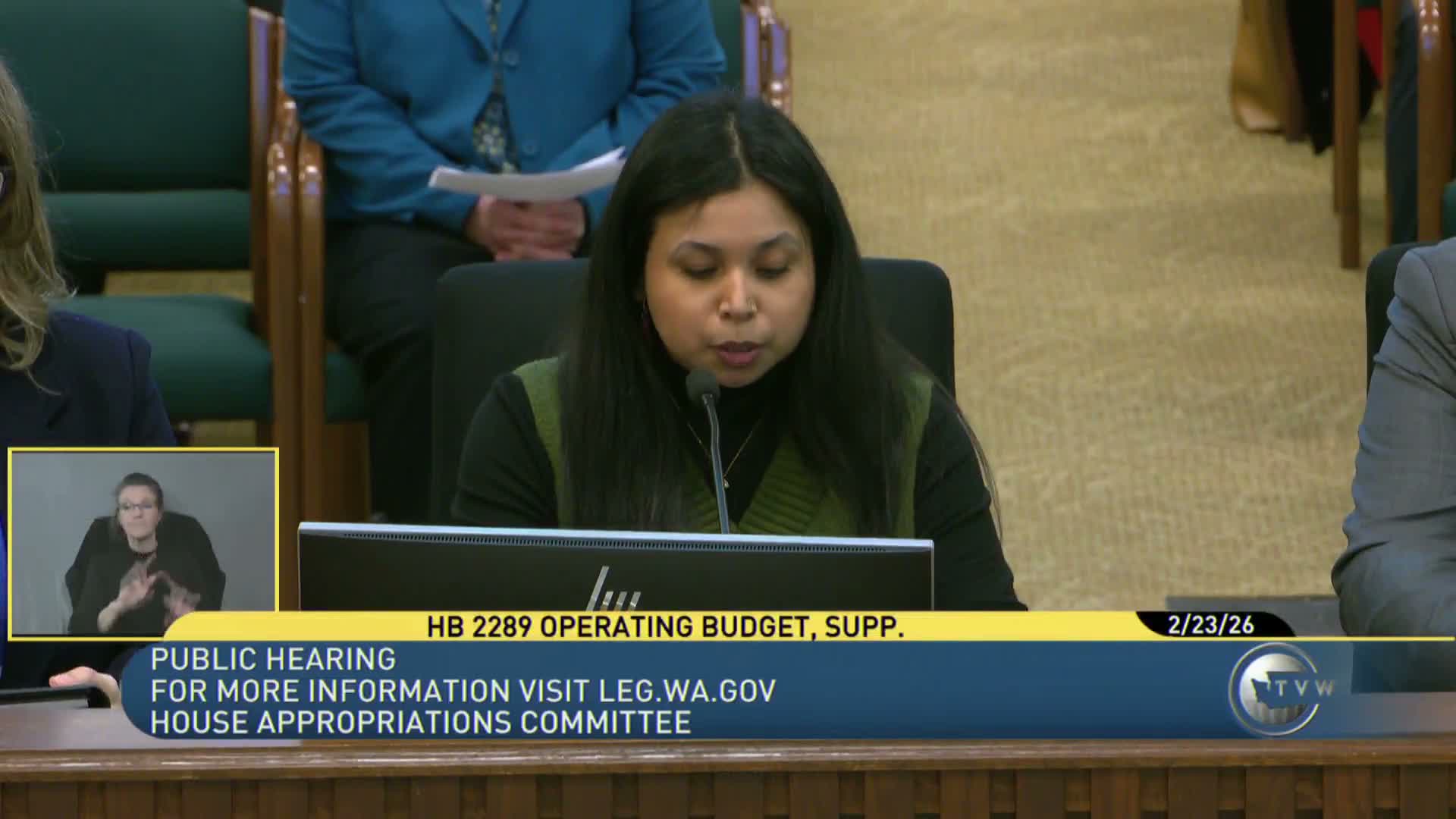
Summary
School districts, educators and parents told the committee that reductions to transition‑to‑kindergarten (TTK), local effort assistance (LEA), running start and changes to bus depreciation will disproportionately harm rural and property‑poor districts, urging restoration of funding and protections for early learning and K‑12 programs.
A coalition of education stakeholders—district leaders, unions and parent advocates—described the House budget’s proposed cuts to K‑12 and early learning as regressive and disruptive.
Larry Delaney of the Washington Education Association said the House proposal "goes in the wrong direction" for students, calling out reductions to transition‑to‑kindergarten (TTK), levy equalization and National Board Certified Teacher stipends. Cynthia Tamayo of the Washington State School Directors Association warned that a $25 million reduction in local effort assistance (LEA) would disproportionately affect 130 districts, many in rural areas, and "is a core equity tool." Multiple rural superintendents and parent advocates described programs such as TTK as the only early‑learning option in their communities and pleaded for restoration to avoid slot losses and disrupted service for incoming kindergarteners.
Several speakers also objected to changes in bus depreciation that extend useful life assumptions, arguing that the modification could delay adoption of electric buses and undermine climate goals while shifting costs to districts. Representatives urged the committee to match the Senate funding levels for several K‑12 items as negotiations begin.
What happens next: Education stakeholders will press members in amendment negotiations and in floor debate; the hearing record establishes explicit equity arguments the Senate and media can use when tracking any restoration or further reductions.