House appropriations briefing outlines tighter near‑general‑fund outlook, uses surplus and one‑time transfers to cover shortfalls
Loading...
Summary
Budget coordinator Mary Monroe told the House Appropriations Committee that the chair’s substitute for House Bill 22‑89 assumes the February 2026 revenue forecast, removes a statutory 4.5% growth add‑on and relies on a mix of transfers and new revenue assumptions (including a millionaires tax and BSA transfers) to produce modest NGFO reserves while projecting a FY28 shortfall.
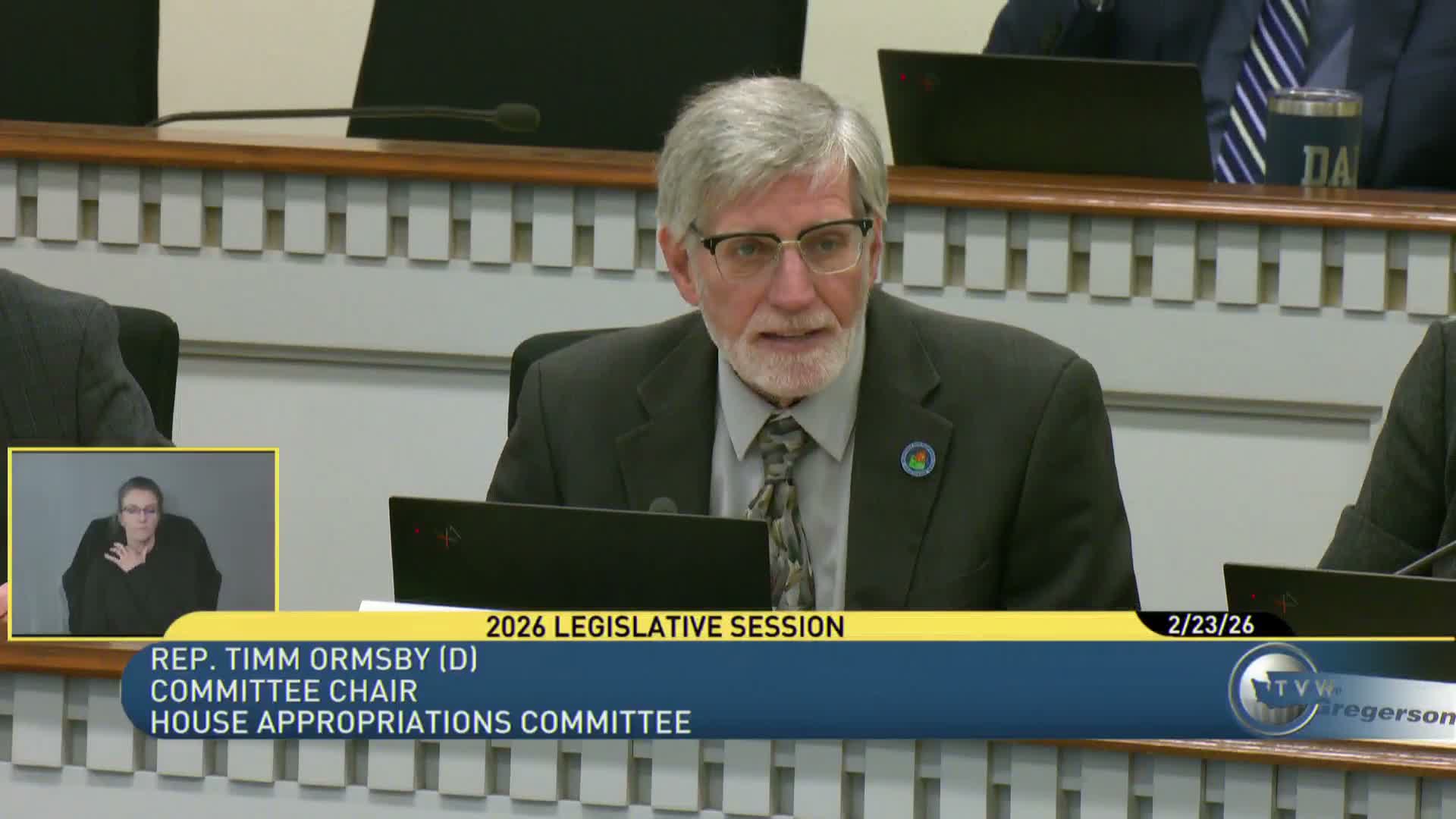
Mary Monroe, the committee’s budget coordinator, opened the hearing with a high‑level briefing of the near general fund outlook embedded in the chair’s proposed substitute for House Bill 22‑89. Monroe said the plan assumes the February 2026 Economic and Revenue Forecast Council forecast, and does not apply the statutory 4.5% growth adjustment that otherwise would add nearly $2 billion in NGFO resources.
Monroe highlighted three revenue and transfer assumptions that materially affect the picture: $2.1 billion in assumed NGFO revenues in fiscal year 2029 tied to a gross Senate bill identified in the materials as a “tax on millionaires,” an $880 million transfer from the Budget Stabilization Account (BSA) into the general fund during the current biennium, and a planned repayment of that transfer in fiscal year 2029. Those moves, plus assumed capital gains resources and other adjustments, produce an NGFO ending balance of about $247 million for the current biennium and $566 million at the end of the four‑year outlook, Monroe said.
Monroe also described how the proposal shifts $239 million from higher‑education building accounts into operating tuition/fees accounts at institutions to offset near‑general‑fund pressure in the current biennium; the capital budget then refinances those building accounts with bonds and uses Climate Commitment Act fund balance and LEHI 1 surplus repayments as mechanisms to repay those balances over time.
On spending, Monroe said the two‑year NGFO net impact of policy changes is roughly $340.5 million—the product of $1.6 billion in spending increases and $1.3 billion in savings over the period—and that maintenance‑level increases of roughly $1.7 billion in 25‑27 are driven by health‑care factors such as managed care rate increases, utilization of low‑income medical assistance, and long‑term‑care caseloads. She noted fiscal year 2028 is projected to show a negative NGFO ending balance under the proposal.
Representative Couture asked for and received a step‑by‑step explanation of the higher‑education building‑account mechanism; Monroe confirmed that the sequence preserves the capital budget’s total programmed value while producing an operating‑budget offset in the near term. Budget staff updated the committee on amendment deadlines and other process items before the hearing moved into public testimony.
What happens next: staff and committee members now have the chair’s substitute language and supporting summary documents online; amendments are due under the schedule announced by the chair. Any final appropriations will depend on negotiations with the Senate and possible revenue or transfer changes.