Get AI Briefings, Transcripts & Alerts on Local & National Government Meetings — Forever.
House committee hears testimony on economic harm to Minnesota businesses from federal enforcement
Loading...
Summary
Lawmakers heard testimony that recent federal immigration enforcement (described in testimony as "Operation Metro Surge") chilled consumer foot traffic and reduced staffing at small businesses statewide, while the administration proposed a $10 million forgivable‑loan package to help affected businesses. Witnesses and philanthropic groups described immediate revenue losses, grant programs, and lingering workforce risks.
The House Workforce, Labor and Economic Development Finance and Policy Committee convened a hearing on the economic effects of recent federal immigration enforcement actions, with lawmakers and witnesses describing reduced customers, worker absences and temporary business closures.
Department of Employment and Economic Development Commissioner Matt Verlick presented demographic and labor‑market figures, saying foreign‑born residents make up about 9% of Minnesota’s population and that the state gained roughly 95,500 foreign‑born residents from 2014 to 2024. Verlick said the foreign‑born population is concentrated in the seven‑county Twin Cities metro and includes a high share of working‑age and highly educated residents, and he told the committee that “the fear meant that lots of workers were not comfortable continuing to show up for work.”
Verlick also summarized a governor’s recommendation to the Legislature for a $10 million forgivable‑loan package for small businesses affected by the enforcement activity: the proposal envisions partially forgivable loans, a three‑year term, 0% interest and an option for 50% forgiveness after one year if employment levels are maintained.
Community groups and local leaders described rapid philanthropic responses and ongoing needs. R.T. Rybak, chief executive of the Minneapolis Foundation, said the foundation raised $4 million in 48 hours for targeted relief and has deployed cash grants and rental assistance. The Latino Economic Development Center reported reviewing hundreds of applications from affected businesses and said applicants collectively requested about $4.49 million in assistance, with 65% reporting revenue declines greater than 50%.
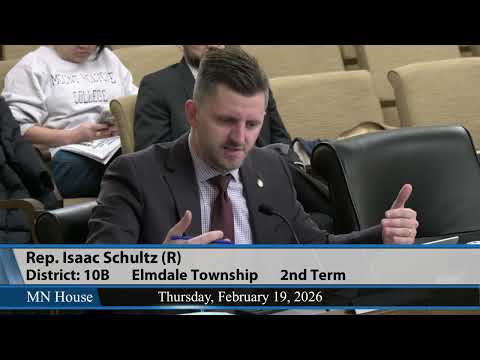
Lawmakers asked officials how the anecdotal business harms align with recent state budget surpluses. Representative Schultz noted January receipts exceeded projections and asked whether state tax revenues undermined claims of widespread economic harm. Verlick and several other witnesses responded that strong statewide revenue figures can mask localized harms and that the state could have grown more without the enforcement‑related disruption.
Committee members discussed funding sources, safeguards for distributing aid and next steps for further hearings and policy work. Co‑chairs said the committee will continue follow‑up and noted additional briefings are planned on related workforce programs.