Lifetime Citizen Portal Access — AI Briefings, Alerts & Unlimited Follows
Planners urge towns to nurture 'third places' to combat isolation and boost local economies
Loading...
Summary
Presenters at the CROG RPC meeting urged towns to prioritize 'third places'—cafes, parks, libraries and other informal gathering spots—arguing they reduce social isolation and support downtown business; presenters proposed low-cost starter steps and larger regulatory changes to encourage them.
Kyle, a presenter, and Jacob, a co-author of a recent paper, presented to the Capitol Region Council of Governments' Regional Planning Commission on the role of "third places"—public settings outside home and work that foster casual social connection.
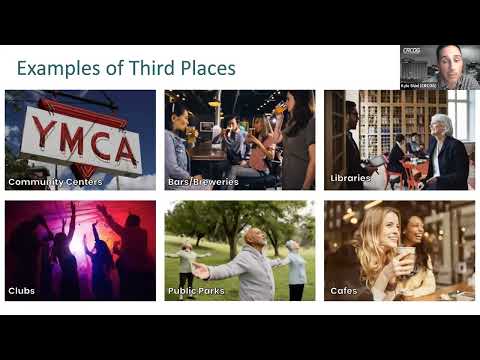
"So third place, yeah, your home is your first place. Your work or your school is your second place. And the third place is sort of like where you go to hang out to connect with other people that's obviously not your home or your work," Kyle said during the presentation, describing cafes, parks, libraries and community centers as typical examples.
The presenters framed such spaces as "social infrastructure" and cited data arguing social isolation has grown: single-person households have increased since the 1960s, screen time has risen and national health authorities have called loneliness a public-health concern. Jacob said the group organized proposed responses into tiers: quick, low-cost "getting started" steps; intermediate efforts requiring staff time; and "all in" actions that need regulatory or capital commitments.
Recommendations included taking an inventory of existing third places, auditing zoning and permitting rules that unintentionally prohibit small commercial footprints, reducing parking mandates that favor large parking lots over walkable main streets, and adding public investments such as wider sidewalks, pocket parks and plazas. Jacob pointed to West Hartford’s ordinance change—removing an old restriction that blocked pool tables and jukeboxes—as an example of how small regulatory changes can allow more lively venues.
Presenters also urged municipalities to streamline permitting with pre-application meetings and to consider nonpunitive complaint mediation (a community liaison or a 311-like service) so noise disputes do not result in business closures.
Commissioners raised implementation questions—how best to adapt recommendations for rural towns, how to staff events or programming, and how pandemic-era trends altered data—but several said the policy toolkit provided useful, actionable ideas. Jacob said follow-up materials and a link to the paper would be shared after the meeting.
The presentation concluded with an offer to support towns that want to pilot the approaches and a request that commissioners suggest local third places to populate a future regional map.