
Traffic study for Longhorn subdivision flags widening needs; commissioners discuss prorated developer participation
Get AI-powered insights, summaries, and transcripts
Subscribe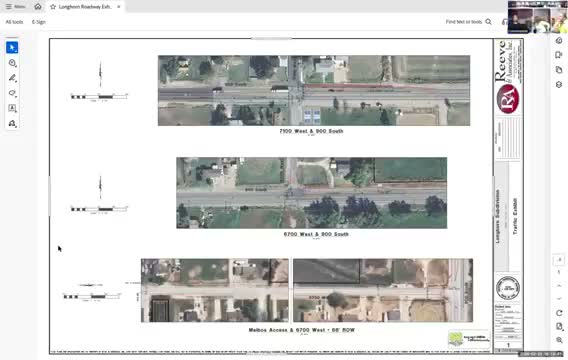
Summary
A county traffic exhibit for the Longhorn project (about 300 units) shows needed widening on 6700 W, turn-lane work and a roughly 100‑foot storage queue; commissioners asked engineering to include developer participation language that prorates future signal costs when warrants are met.
County engineers presented a traffic‑impact exhibit for the proposed Longhorn subdivision that identified needed intersection and road improvements and set options for how developers would pay their share.
The study models about 300 units and two primary access points at 7100 West and 6700 West onto 900 South. Engineers said roughly 32% of project traffic would use 7100 West, while most would use 6700 West; recommendations include widening 6700 to a county standard (raising sections from roughly 20–22 feet to a minimum of 24 feet and up to 36 feet in key locations) and adding turn‑lane storage and tapering so turning movements fit within the right‑of‑way. “We are widening to 36 feet of asphalt so that we can get all of the turning movements inside of that intersection,” Nate Reeve said.
Peak‑hour queue lengths at the 6700/900 South approach are small now (about four vehicles, roughly 100 feet of storage), but commissioners pressed for forward‑looking solutions if traffic increases with additional nearby subdivisions. Commissioner Harvey argued for a pioneering agreement that lets the first developer recoup improvement costs if subsequent development increases demand; others favored a formula that prorates contribution once signal warrants are met so no single developer bears future unexpected costs.
Engineering estimated the first round of intersection improvements tied to a subdivision could be on the order of several hundred thousand dollars (Pat’s current traffic impact study lists about $300,000 of immediate improvements), while a fully signalized intersection upgrade can exceed a million dollars. Commissioners directed staff to draft development‑agreement language that allows prorated cost participation based on measured traffic counts and to bring planning staff and developers together for a short, focused review of the western Weber general plan to align transportation expectations with land‑use decisions.
What’s next: county engineering will draft sample development‑agreement language for prorated participation, coordinate counter placement to measure contributions, and present recommended contract language and a timing plan to commissioners.