Lifetime Citizen Portal Access — AI Briefings, Alerts & Unlimited Follows
LSST camera assembled at SLAC, shipped to Rubin Observatory and mounted for decade‑long survey
Loading...
Summary
An unidentified presenter summarized the LSST camera’s assembly at SLAC National Accelerator Laboratory, its testing in 2024, shipment to the Rubin Observatory on Cerro Pachón, Chile, and mounting on the telescope in 2025 ahead of a planned 10‑year sky survey.
An unidentified presenter described the multi‑year assembly and deployment of the LSST camera, saying the project began mechanical integration in 2017 at SLAC National Accelerator Laboratory and reached key milestones through 2024 and 2025.
The presenter said the project completed the camera’s 3,200‑megapixel sensor in 2019 and installed detector modules into the cryostat that maintains operating temperatures. “Each piece of the sensor is carefully slipped into the cryostat that keeps everything cool during operation,” the presenter said.
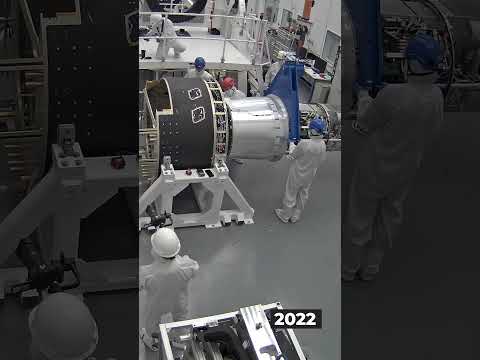
They described parallel work on the camera body and the addition of a utility trunk in 2021—what the presenter called the camera’s “life support,” which houses refrigeration and electronics necessary for operations. After final integration and installation of the large front optical elements, the camera underwent intensive testing in 2024 and was declared ready for shipment.
The presenter said the instrument was packed and transported to Chile and taken to the summit of Cerro Pachón, the site of the Vera C. Rubin Observatory. In 2025, the camera was mounted on the observatory’s telescope and the team announced the start of a 10‑year Legacy Survey of Space and Time (LSST), a planned survey the presenter characterized as a decade‑long effort to capture unprecedented cosmic data.
“And now, we’re about to launch a 10 year sky survey capturing more cosmic data than ever before,” the presenter said, inviting the public to follow documentation of the project.
No formal motions, votes, policies, or legal authorities were discussed during the remarks. The presentation focused on technical milestones, testing, shipment and installation; the presenter did not identify themselves by name or provide additional operational timelines or funding breakdowns.