Lifetime Citizen Portal Access — AI Briefings, Alerts & Unlimited Follows
CalCCA outlines 2026 legislative push, cites PCIA transparency bill AB 1761
Loading...
Summary
CalCCA communications manager Jax McDonough told the San Diego Community Power advisory committee that CalCCA will sponsor bills in 2026 focused on PCIA data transparency (filed as AB 1761) and resource adequacy transactability, arguing both would improve cost predictability for CCAs and customers.
Jax McDonough, communications and marketing manager at CalCCA, gave an overview of the association—s role and its legislative priorities during the San Diego Community Power Community Advisory Committee meeting on Feb. 26. McDonough said CalCCA, a 10-year-old trade association of California community choice aggregators, helps member CCAs coordinate on regulatory filings, advocacy and pooled procurements.
CalCCA plans to sponsor two bills in 2026. The first, McDonough said, is a data-transparency measure filed three days earlier as AB 1761 that "would require the IOU and CPUC to provide transparent data on PCIA calculations to CCAs," enabling CCAs to review and anticipate power-charge-indifference-adjustment (PCIA) costs. McDonough framed the second bill as technical but consequential: changing how resource adequacy (RA) procurement is counted so load-serving entities can contract on an hourly basis rather than buying large multi-hour blocks.
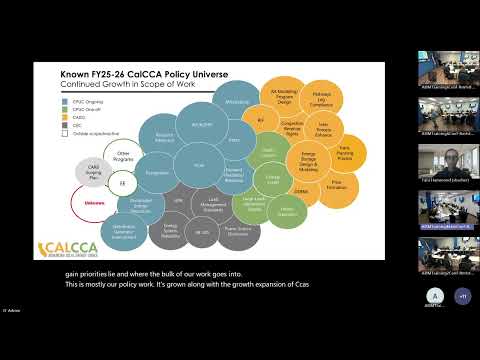
CalCCA—s presentation stressed affordability as the organizing priority across its work on procurement, transmission financing, and PCIA reform. McDonough said CalCCA supports member-driven policy development and coordinates substantial regulatory activity: he estimated the group participates in over 60 proceedings and that its regulatory team filed thousands of pages of testimony last year.
Committee members asked how CCAs collaborate on procurements. McDonough and Community Power staff explained that CCAs typically cooperate through joint solicitations, joint-power projects and informal partnerships rather than bidding directly against one another in the same service territory. McDonough pointed to existing pooled purchases and a separate joint-entity (California Community Power) that helps several CCAs sign projects together.
The presentation concluded with an invitation to members to consult CalCCA—s public resources and the association—s upcoming 10th-anniversary conference in Sacramento.