
Committee Advances Multiple Agritourism and Craft‑Beverage Reforms; Distillers, Wineries Seek Technical Fixes
Get AI-powered insights, summaries, and transcripts
Sign Up Free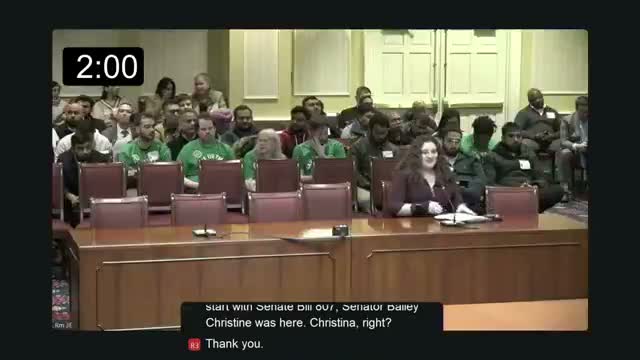
Summary
Lawmakers heard a cluster of bills to modernize farm‑brewery, winery and distillery licensing, create a farm distillery license, permit bulk wine transfers and other technical updates intended to support agritourism and small producers.
Senate members considered several agritourism and craft‑beverage bills aimed at easing regulatory burdens for Maryland producers and strengthening rural economic development. Christina Vigorito presented SB807 to create a Class 10 farm distillery license and amend farm brewery provisions; the bill would authorize limited distilling tied to Maryland agricultural ingredients and allow shared sales among in‑state manufacturers within certain caps.
SB803 (Class 3 and Class 4 wineries) was presented as a set of technical fixes to permit farm wineries to transfer and receive bulk wine, and to clarify that some limited brandy production should be allowed from fruit‑based wines beyond pomace. Matt Bowley of the Maryland Wineries Association and Tian Seng Chu (Far Eastern Shore Winery) supported the measures, describing revenue, grapes acreage and agritourism benefits.
Senate testimony included support from agricultural and winery trade groups and written letters from county farm bureaus; the Maryland Association of Counties raised zoning and local oversight concerns for SB807, saying the bill as drafted would preempt local land‑use regulation for large agricultural processing operations and could allow industrial‑scale production on ag land without community review. Committee members discussed potential amendments to preserve local planning authority while enabling agritourism growth.
Committee concluded the panel with no immediate changes recorded and indicated staff would circulate proposed technical amendments addressing local control and environmental/community safeguards.