
Senate Committee Hears Heated Testimony on Bill Letting Grocery Stores Sell Beer and Wine
Get AI-powered insights, summaries, and transcripts
Sign Up Free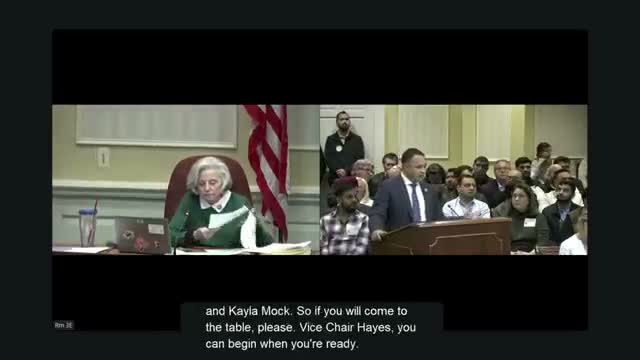
Summary
The Senate Finance Committee held a lengthy hearing on SB75, a bill that would allow qualifying grocery stores to acquire limited beer-and-wine licenses after offering to buy nearby packaged‑goods licenses. Supporters said the change will modernize retail and expand food access; opponents said it threatens small family‑owned liquor stores, local suppliers and community safety.
Senator Antonio Hayes, the bill sponsor, told the Senate Finance Committee that SB75 creates a narrow pathway for qualifying food retailers to obtain limited Class A beer‑and‑wine licenses while preserving local board oversight and protections for existing licensees. "This bill essentially is five paragraphs on page 3," Hayes said, describing a framework that requires a grocer to offer to buy a nearby Class A license at fair market value and subjects any resulting sale to the local liquor board's approval.
Proponents framed the measure as consumer‑friendly modernization. Kaylee Locklear of the Maryland Retailers Alliance said polling and constituent contacts show broad public support and urged the committee to adopt a controlled expansion. "Nearly every state allows some version of this model," Locklear said. Michael Adams, representing grocery retailers, called SB75 a measured reform that maintains local discretion while removing what he described as an outdated statewide prohibition.
Labor and economic proponents stressed jobs and revenue. Kayla Mach of United Food and Commercial Workers Local 400 told the committee the bill could generate roughly $32 million in new state revenue and create hours and jobs for grocery workers.
Opponents argued the bill would undercut a network of small, family‑owned packaged‑goods retailers, harm Maryland producers and increase community alcohol availability. Dozens of small store owners and local industry groups testified in opposition, describing long family histories in retail, local hiring and community philanthropy. "If every Royal Farms and major chain could sell beer and wine, we won't be able to compete," said Jim Spiriopolos, owner of Town Center Market, describing staff and community programs that depend on current margins.
Trade groups representing wholesalers, breweries, wineries and liquor retailers warned of market concentration and price pressure that could redirect sales from local stores and Maryland producers to national chains. Brad Rifkin, speaking for Maryland breweries, said larger retailers' buying power and promotional reach would disadvantage small producers and specialty retailers who rely on a diverse retail base to sell limited SKUs.
Public‑health and local leaders raised concerns about outlet density and youth exposure. Written testimony submitted to the committee cited peer‑reviewed research and agency findings linking higher outlet density to increased consumption and social harms; proponents disputed studies drawn from other states and pointed to regulatory options such as store‑within‑store models and local licensing discretion to mitigate those risks.
Several senators pushed for amendments that would tighten protections for smaller retailers — suggestions included replacing the bill's "offer at fair market value" language with an explicit arm's‑length purchase requirement; limiting geographic scope; and directing some new revenue to food access or community programs. Many opponents said such fixes would be insufficient and urged an unfavorable report.
The hearing included numerous specific proposals and technical points — the bill sets a 3,200‑square‑foot retail minimum in its current draft and a 3,000‑foot radius for required purchase offers — but concluded without committee action. Vice Chair Hayes urged further negotiation, saying the bill contains multiple places where compromise is possible and local liquor boards retain their final approval role.
The committee did not vote on SB75 at the hearing. The bill's next steps were not announced at the close of the session.