Get Full Government Meeting Transcripts, Videos, & Alerts Forever!
Get email alerts on the Land Use topic
No spam. Unsubscribe anytime.
Planning & Zoning approves Willow Creek PD for 360.3‑acre master‑planned community in McLendon‑Chisholm
Summary
The McLendon‑Chisholm Planning & Zoning Commission voted to approve the Willow Creek Plan Development (PD) district for a proposed master‑planned residential community on about 360.3 acres, after the developer described plans for up to 414 lots, a 47‑acre park, trails and phased improvements to Klutz Road. A resident raised concerns that net density (excluding floodplain and ROW) could be higher than materials indicated.
The McLendon‑Chisholm Planning & Zoning Commission on the evening of the meeting voted to approve the Willow Creek Plan Development (PD) district, a master‑planned residential project proposed for about 360.3 acres west of Highway 205 and fronting FM 550.
Ty Young of Skorberg Company presented the development concept, which the team described as a mixed lot product with a developer‑presented maximum gross lot count of 414 lots, a minimum lot width standard of 110 feet for many lots, and a plan that includes roughly 47 acres of parkland to be dedicated to the city after developer‑installed amenities. Young also described more than 3 miles of trails, three wet ponds and an 8‑foot concrete hike‑and‑bike trail intended to connect to a future Rockwall ISD school site north of the tract. Young said the city previously approved a Public Improvement District (PID) for related infrastructure and that 113 acres of the site had been annexed into the city subject to approval of the PD and development agreement.
The developer told the commission the project includes a first phase that would fund and construct two lanes of Klutz Road (from Smith Road to Highway 205) and associated underground storm infrastructure before building homes on the eastern side of the creek. Young presented cost estimates showing the two‑lane improvement would cost roughly $7.9 million on the city's estimate but that the developer believed it could construct the work for about $4.8 million, which the developer described as an estimated net savings to the city of about $3.1 million. Young attributed the ability to absorb the roadway cost in part to adding 33 lots in the latest concept and to developer economies of scale.
In public comment before the commission’s vote, David Black, a McLendon‑Chisholm resident, told the commission he was concerned the Willow Creek plan conflicted with the McLendon‑Chisholm comprehensive plan (approved 09/29/2021), which he said sets residential lot expectations near one acre in parts of the city. He said the density figure provided in published materials (1.15 dwelling units per acre, gross) was misleading because that number excluded floodplain areas and rights‑of‑way; Black said, on that basis, the net density could be “about double” the advertised figure. Young responded during the presentation that the site contains FEMA 100‑year floodplain and that the plan intentionally places trails and passive open space in those areas; he estimated (not as a precise study figure) roughly 60–70 acres might fall in the FEMA floodplain but did not provide a precise acreage as a firm study result.
The commission heard technical and operational clarifications: Ty Young confirmed High Point SUD is the proposed water provider and said the developer has a will‑serve letter; Adam Bucek of Squareboard Company described HOA governance and said the developer will control the HOA board until homeowner elections at the statutorily required build‑out threshold. Young and Bucek identified prospective builders the developer has contacted (examples mentioned included Toll Brothers and Windsor), but said no builder contracts had been finalized.
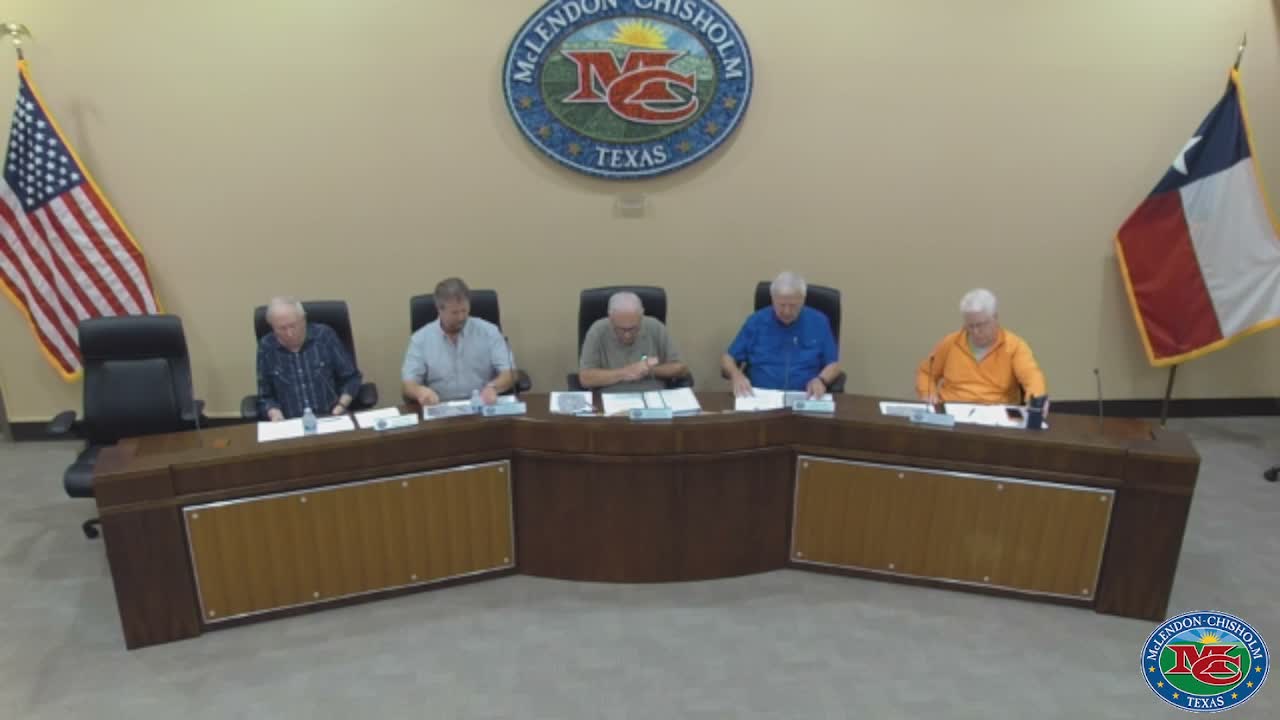
After the presentation and questions, a motion to approve the Willow Creek Plan Development District was made and seconded. The commission voted by voice and the chair declared the motion carried and the PD approved by the Planning & Zoning Commission.
What happens next: the Planning & Zoning Commission’s approval advances the zoning recommendation/PD to the procedural steps required by city code (staff and council action as applicable). The development team told the commission that the annexation and development agreement components had been presented to and received action from the city council or were part of prior council approvals tied to the PID; the developer’s presentation referenced a council PID approval on Nov. 10 and said annexation petitions were part of the development agreement.