Lifetime Citizen Portal Access — AI Briefings, Alerts & Unlimited Follows
DHS outlines enhanced prepayment review with Optum as it refines analytics and seeks to protect Medicaid funding
Loading...
Summary
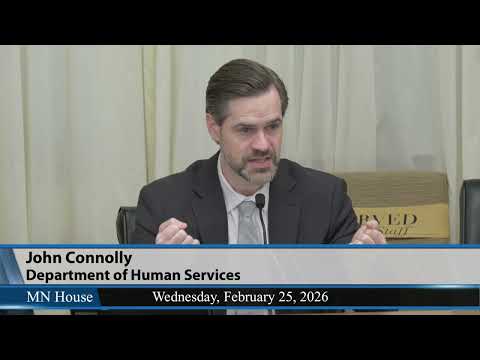
Deputy Commissioner John Connolly told the House Human Services Finance and Policy Committee that DHS has engaged Optum to run analytics on 14 high-risk fee-for-service programs and is implementing an enhanced prepayment review to protect Medicaid funds while expanding provider outreach and safe-transition supports.
Deputy Commissioner and State Medicaid Director John Connolly told the House Human Services Finance and Policy Committee that Minnesota's Department of Human Services is working with vendor Optum to strengthen Medicaid program integrity by shifting from a "pay-and-chase" approach to enhanced prepayment review.
Connolly said DHS submitted corrective action materials to the Centers for Medicare and Medicaid Services after CMS requested actions (letters dated 12/05/2025 and 01/06/2026) and that the agency has prioritized program integrity to protect federal Medicaid funding. He said Optum conducted a 90-day vulnerability assessment and now supports a phase of prepayment analytics focused initially on 14 "high-risk" services in the fee-for-service program.
"This is not a finished product," Connolly told the committee. He said Optum's vulnerability report reflects a point-in-time analysis and DHS is actively refining analytics and recommendations; some changes can be implemented administratively and others could require legislative action.
How the prepayment review works: Optum runs analytics on claims (reported as an initial five-day analytic run), flags claims that meet state-designed indicators, and transmits flags to DHS program and policy teams. DHS staff then review flagged claims within the two-week warrant cycle (DHS said reviewers generally take up to five days within that period) and may request additional documentation from providers or members. If program-integrity concerns persist, a claim may be referred to the Office of the Inspector General for investigation.
Connolly acknowledged disruption: DHS paused claim payments around Dec. 23 to implement the process, which led to delays of two to four weeks for some providers before the state returned to a biweekly payment cadence beginning Jan. 27. To reduce service disruption, DHS said it implemented a "safe transitions" framework (Nov. 2025) and repurposed a complex transitions team to help maintain continuity of care when payments are withheld.
Optum's Jason Bridal said Optum's role is analytical: the company generates indicators of anomalous or outlying billing behavior, but it does not make determinations of fraud, deny claims, or take enforcement action. "All decisions and authorities remain solely with DHS," Bridal said.
Committee members repeatedly asked whether analytics account for statutory medical-necessity criteria and program-level authorizations (Rep. Hicks used EIDBI as an example). Optum and DHS said analytics are derived from state policy and provider-manual specifications where available, and DHS said it has shifted to using "direct policy analytics" that align with provider manuals and statute where possible. DHS also said the analytics are evolving and that policy teams have been incorporated in analytic design and ongoing adjustments.
DHS pledged more transparency and oversight data: Connolly said department teams will replicate and validate Optum's analyses, provide follow-up reporting (shares of flagged claims later paid, under investigation, or referred), and run a competitive RFP for a longer-term analytics vendor.
The department emphasized balancing two imperatives: strengthening program integrity to protect taxpayer dollars while preserving access and continuity of services for program members. "We want to make sure that actions we take'as much as we possibly can'do not threaten the safety and health and well-being of the people we serve," Connolly said.
Next steps include continuing refinement of analytics, sharing additional operational metrics with the committee on a regular cadence, and working with legislators on statutory changes if needed.
Ending: DHS said it is in early cycles of enhanced prepayment review, that Optum's report was an initial milestone, and that department teams will continue to adjust analytics and provide legislators with more detailed follow-up metrics and briefings.