Lifetime Citizen Portal Access — AI Briefings, Alerts & Unlimited Follows
House commission considers bill to let cooperatives separate inactive members after five years
Loading...
Summary
The House Commission on Cooperativism heard testimony on House Bill 772, which would let cooperatives initiate separation of members with no account activity for five years and treat resulting shares as unclaimed funds, while requiring notice, an administrative hearing and publication safeguards.
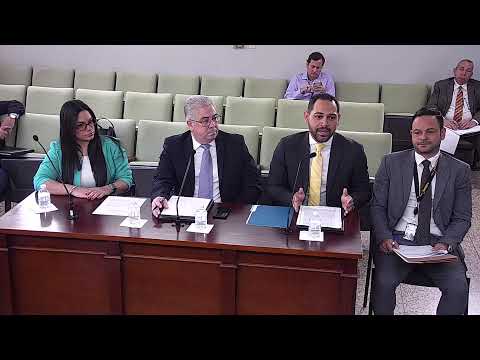
Cristian Muriel opened a public hearing of the House Commission on Cooperativism on Feb. 25, 2026, to consider House Bill 772, which would amend articles 4.06 and 6.09 of Law 255 of 2002 to allow cooperative savings-and-loan institutions to begin separation procedures against members whose share accounts have been inactive for five consecutive years.
SEDECOP (the Commission of Cooperative Development) and COSEC (the public corporation for supervision and insurance of cooperatives) told the commission they support the measure. Adalberto Reyes Garcés, subcomisionado of SEDECOP, told the panel the change would harmonize cooperative law with existing unclaimed-property rules and provide cooperatives “una herramienta para poder separar a estos socios que no se encuentran cumpliendo con su deber de diligencia como cooperativistas.”
An unidentified COSEC representative said the bill creates an ‘‘objective, verifiable and reasonable’’ trigger for review and embeds procedural safeguards. The representative listed what they described as core protections: certified-mail notification to the member including the account balance and date of last transaction, “derecho a una vista administrativa dentro de los 30 días,” a board decision with written findings, and publication of notice for 90 days with an opportunity to claim funds.
COSEC argued the measure would improve prudential supervision and the accuracy of cooperatives’ capital accounting by allowing boards to remove indefinitely inactive share accounts from capital calculations. “La permanencia indefinida de cuentas de acciones inactivas distorsionan la realidad financiera e institucional de las cooperativas,” the COSEC representative said, adding that the change is meant to strengthen transparency and solvency oversight rather than to punish members.
During questions, representatives asked whether cooperatives face costs from maintaining inactive accounts and whether COSEC had data on how many share accounts have been inactive five or more years. The COSEC representative said the corporation does not currently have an estimate of the number of inactive share accounts and that cooperatives will need to begin depurating those accounts; COSEC confirmed there are operational costs tied to maintaining inactive accounts in systems and audits.
Members also queried the required method of notification. The COSEC speaker recommended a verifiable method and said certified mail ‘‘provee una garantía’’ used by courts, while noting regulations could specify additional acceptable methods.
Representative Lilibeth Rosas of Mayagüez and San Germán said the proposal strikes a ‘‘just balance’’ between member rights and cooperative administration and supported the measure. The record shows SEDECOP and COSEC favor approval, but the transcript contains no formal committee vote or final action on HB 772.
The commission adjourned at 10:27 a.m.; SEDECOP and COSEC left themselves available for follow-up questions and technical work on notification and implementation details.