Get Full Government Meeting Transcripts, Videos, & Alerts Forever!
Get email alerts on the Healthcare Access topic
No spam. Unsubscribe anytime.
Free clinic officials describe growing demand, say Medicaid acceptance expands access
Summary
The Flint/Palatine free clinic told the Powhatan County Board of Supervisors it has started accepting Medicaid, expanded services and seeks county help to add exam rooms and staffing to meet rising demand, especially for dental and behavioral health.
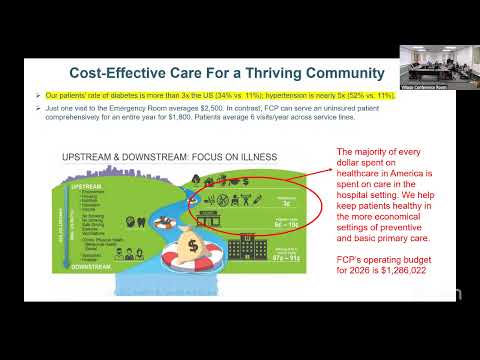
Elizabeth Ream, director of the Flint Clinic, told the Powhatan County Board of Supervisors on Feb. 23 that the clinic has broadened services across a four‑county area and recently began accepting Medicaid to help patients who have coverage but limited provider access. "If you happen to have Medicaid insurance, it doesn't mean you can see a doctor," Ream said, describing local specialists' low Medicaid participation and the clinic’s role coordinating care.
Ream said the clinic now provides medical, dental, behavioral health and nutrition services and uses charity‑care arrangements and a clearinghouse called AccessNow to place uninsured patients with specialists. She cited high demand for dental care and growing need for mental‑health services, and noted the clinic’s volunteers and case managers also help patients with transportation and appointment navigation.
Dr. Barbara Brown, identified in the meeting as the clinic’s board chair and Powhatan’s representative on the Reynolds board, thanked the county for recent support for the clinic’s pantry and volunteer programs. Ream said the clinic’s dashboard shows significant volunteer hours and broad community partnerships, and detailed income‑based eligibility: services up to 250% of the federal poverty threshold and senior dental and behavioral health up to 300% in some cases.
Ream described a specific change in operations: adding Wednesdays of medical care and plans to expand exam rooms so multiple clinicians can see patients simultaneously. "We are going to be adding areas that are very much needed in particular to exam rooms," she said, asking the county to approve space adjustments in public‑works areas and thanking staff who will help reconfigure space.
Board members and residents asked about specialist referrals and patient costs. Ream said for uninsured patients many specialty services are provided free through charity care rules that require larger specialty practices to provide a percentage of charity services; for some services patients pay negotiated reduced rates. She gave an example of an MRI that cost just over $1,000 with a patient copay of $165 under a negotiated charity‑care arrangement.
Ream invited board members to tour the clinic and promoted community events the clinic runs, including a 5K fundraiser and cohort classes funded in part by Massey Cancer Center aimed at nutrition and chronic‑disease coaching. The clinic said it will continue outreach to increase ridership on regional transit links and build partnerships with hospitals and other nonprofits to expand capacity.
The board did not take formal action on funding at the meeting; members thanked the presenters and encouraged continued collaboration and site visits.