Get Full Government Meeting Transcripts, Videos, & Alerts Forever!
Get email alerts on the Tribal Public Safety topic
No spam. Unsubscribe anytime.
Senate Committee on Indian Affairs opens oversight hearing on tribal public safety
Summary
The committee opened an oversight hearing focused on persistent public-safety gaps in tribal communities — including funding shortfalls, missing and murdered Indigenous people, and fentanyl — and invited DOI, Justice and HHS to explain implementation of recent laws and priorities raised in a March listening session.
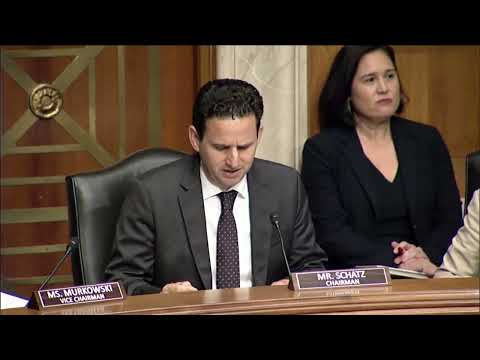
An unnamed chair of the Senate Committee on Indian Affairs opened an oversight hearing saying, “One of the fundamental trust and treaty obligations to tribal nations is to protect the public safety on their lands,” and laid out the hearing’s purpose: to press federal agencies on unmet public-safety needs in Native communities.
The chair reviewed a history of congressional action intended to address tribal public safety, citing the General Crimes Act of 1817, the Tribal Law and Order Act of 2010, Savanna’s Act, the Not Invisible Act and reauthorization of the Violence Against Women Act. The chair said those laws reflect repeated congressional commitments but added that “public safety challenges persist.”
In his opening remarks the chair listed specific shortfalls: inadequate federal funding and staffing for law enforcement and corrections; complicated, “patchwork” criminal jurisdiction across jurisdictions; deteriorating or absent detention facilities; the ongoing crisis of missing and murdered Indigenous people (MMIP); and the growing harms of fentanyl. He also said the Supreme Court’s McGirt decision has made resource gaps more acute for tribal jurisdictions.
The chair said the committee’s work has been informed by stakeholder input: an earlier March listening session drew more than 600 participants, and commenters prioritized MMIP and law-enforcement recruitment and retention. The chair noted the panel also held a bipartisan legislative hearing earlier in the month on two bills intended to address those priorities.
The hearing’s immediate purpose, the chair said, is oversight: witnesses from the Department of the Interior, the Department of Justice and the Department of Health and Human Services were invited to explain how their agencies are addressing these shortfalls and implementing the laws Congress has enacted. The chair closed by thanking the witnesses and turning the floor to Vice Chair Murkowski for her opening remarks.
The hearing then proceeded to Vice Chair Murkowski’s statement (transcript continues).