Get Full Government Meeting Transcripts, Videos, & Alerts Forever!
Get email alerts on the OPO Accountability topic
No spam. Unsubscribe anytime.
Patient representatives tell new OPTN board OPO involvement can harm families, urge accountability
Summary
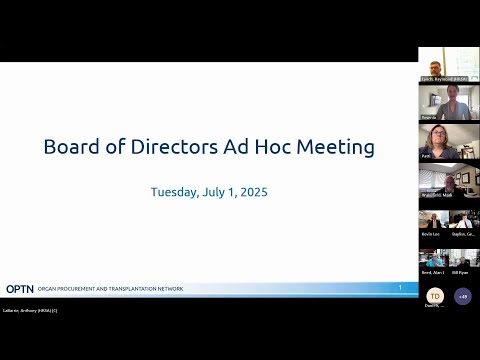
At a July 1 Invest/OPTN special meeting two patient representatives recounted experiences they said showed poor care and pressure from organ procurement organizations (OPOs); the new board pledged follow-up and identified patient safety and OPO oversight as top priorities.
Two patient representatives told the newly seated OPTN board on July 1 that involvement by organ procurement organizations can make already traumatic hospital stays worse and asked the board to strengthen oversight.
At the meeting’s call to purpose, Yersinia Diaz, introduced as a two-time kidney recipient and patient representative, praised the Health Resources and Services Administration and transitional nominating committee members and urged the board to center equity and dignity in organ transplantation policy. “Be bold, be anchored in justice, and be relentless in ensuring that no life is left behind in the systems that we've shaped,” Diaz said.
Patty Dorotte, an RN and family member of a patient who was referred to an OPO, described her nephew Chris’s case as an example of poor care coordination and family pressure when donation was discussed. Dorotte said hospital and OPO staff “went from caring about us and concern for us and compassion for us to cold” after the family decided it was not the right time for donation. She asked the board directly, “who's holding the OPOs accountable when the care they deliver is poor quality and otherwise unsafe?”
Board leaders responded immediately. John McGee, the newly elected board president and a transplant surgeon, called the accounts “sobering” and said the board must treat patients’ stories as the reason for their service: “These are real live patients, and they and their families are depending on all of us to do this work,” McGee said. Several directors and committee members agreed the testimonies showed process gaps between donor hospitals and OPOs that need review.
Board members and staff promised follow-up. An AIR staff member said the board and HRSA would work to address the concerns and report back to the witnesses. Legal and policy staff flagged patient safety and modernization work streams — including ongoing contract work on IT modernization and patient-centered communication — as potential inputs to policy discussions.
Why it matters: the OPTN (operated under the Invest designation agreement and overseen by HRSA) sets national policy affecting organ allocation and the interface among hospitals, OPOs and transplant centers. Testimony that families experienced pressure or degraded care during donation discussions raises oversight and patient-safety questions that the new board said it would prioritize.
What’s next: board members encouraged the witnesses to remain engaged and said the board will pursue follow-up actions through staff, committees and HRSA coordination. The meeting moved to other agenda items and later into a closed session for additional matters.