Get AI Briefings, Transcripts & Alerts on Local & National Government Meetings — Forever.
Zoning board denies San Angelo property owner’s request for 24x24 workshop after tie votes
Loading...
Summary
The San Angelo Zoning Board of Adjustment denied a variance for a 24-by-24 accessory structure at 3942 Inglewood Drive after two 3–3 votes failed to reach the six affirmative votes required. Owner Ramon Ramon and staff debated lot shape, overhead electrical easements and whether a smaller or reconfigured building could meet setbacks.
The San Angelo Zoning Board of Adjustment on a split board decision denied a request to allow a 24-by-24 workshop at 3942 Inglewood Drive, leaving the owner without the variance he said he had sought for more than a decade.
Senior planner Austin Rees told the board the property, in the Sunset neighborhood (District 6), would need variances from section 5 0 1 a to allow a 4-foot rear setback instead of 20 feet and a 2-foot side setback instead of 5 feet because the proposed accessory structure would be too close to the house and lot lines. “We do think the property is of sufficient size, and the surrounding properties mostly abide with the zoning regulations, so really we weren’t able to find any special circumstances in this case,” Rees said.
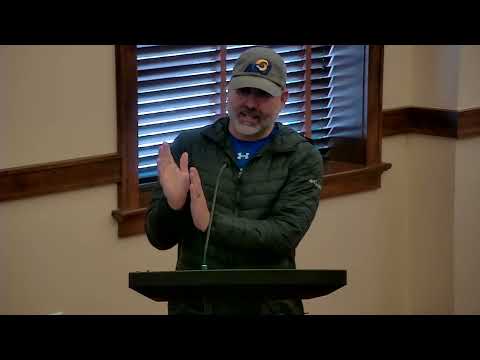
Owner Ramon Ramon described repeated attempts to fit a workshop onto his irregularly shaped lot while avoiding an overhead electrical easement. “I’ve been working on this off and on for about 10 years,” Ramon said. “I’m just trying to satisfy the city, satisfy AEP.” He told the board he could reduce the size but hoped to keep a 24-by-24 building.
Board members pressed on alternatives: reducing width, making part of the structure open rather than enclosed, or maintaining a 10-foot separation from the house so the building would be treated as an accessory structure under the ordinance. Several members said a smaller footprint — for example 18-by-24 or 20-by-24 — might avoid the need for a variance.
The board first voted on a motion to deny the requested variance in favor of approval for a smaller structure; the ballot was split 3–3 and failed. A second motion to approve the variance also ended 3–3. One board member noted the local ordinance requires unanimous support of the six board members present to authorize a variance; without six affirmative votes the request cannot pass. The chair declared the variance denied.
Ramon asked whether the board could revisit its decision if members reached a different conclusion; staff said the applicant could provide new information or a revised plan for later consideration. Rees and other staff urged the applicant that maintaining at least a 10-foot separation from the principal building or redesigning the workshop as an open-sided structure could bring the proposal into compliance without a variance.
The board’s action leaves the owner the option to resubmit a revised plan or seek a building configuration that satisfies setback rules. The board did not adopt any amendments to the requested variance and provided no alternative approvals at the meeting.
Next procedural steps: the applicant may return with revised plans or new evidence; the board noted that a future motion would require six affirmative votes to grant a variance.