Get Full Government Meeting Transcripts, Videos, & Alerts Forever!
Get email alerts on the Nccai Foundation Launch topic
No spam. Unsubscribe anytime.
NCAI launches foundation to channel philanthropy into tribal priorities
Summary
The National Congress of American Indians this year launched the NCAI Foundation, a 501(c)(3) arm designed to marshal philanthropy for tribal governance, youth leadership, environmental work and tribal programs; leaders urged foundations to build long-term, tribe-driven funding partnerships.
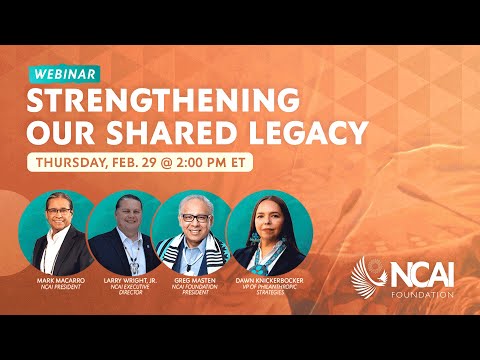
The National Congress of American Indians has created a new philanthropic arm, the NCAI Foundation, to expand funding and technical support for tribal nations, the group’s leaders said during a webinar.
Greg Mastin, president of the newly formed NCAI Foundation, said the foundation is the 501(c)(3) successor to the NCAI Fund and will support NCAI as an organization while deepening its ability to back tribal programs and services. "We will strengthen our ability to organize, to engage, and to plan and develop, and to scale funding opportunities at both a regional and national level," Mastin said.
Mastin outlined four organizational priorities: sustaining NCAI’s institutional work, empowering tribal leaders, cultivating youth leadership and fortifying tribal nations by supporting programs and services. He said the foundation will focus programmatically on five areas — education; the environment; infrastructure and technology; health and wellness; and economic and workforce development — and will use regranting to expand access to funds for tribes and trusted partners.
Leaders said the foundation will support NCAI’s policy work and conferences, expand the policy team and build an endowment to ensure long-term operations. Mastin described plans for a "tribal nations embassy" in Washington, D.C., as a convening and meeting space for tribes and partner organizations.
Larry Wright Jr., NCAI’s executive director, called the foundation a practical response to a long-standing resource gap that limits tribes’ ability to implement thousands of NCAI resolutions. "When we look at the federal budget process and relying on federal dollars... those dollars only go so far," Wright said, describing philanthropy as a complementary source of flexible funding and capacity building.
The foundation will offer technical assistance, training in philanthropic strategies and regranting mechanisms. Mastin said staff will coordinate with native-serving organizations and intertribal partners the foundation already works with, and that the foundation will prioritize "meaningful partnerships based on mutual respect." He added that NCAI will at times decline funding that does not align with tribal values.
Panelists cited existing NCAI programs that the foundation will support, including the Wilma Mankiller Fellows program and leadership training partnerships with institutions such as Harvard. They also said the foundation will back a national tribal environmental platform and convene task forces and committees focused on environmental sovereignty.
The panel closed with leaders framing the foundation as one step in a longer effort to ensure tribes have stable, tribe‑driven access to philanthropic capital that supports sovereignty, governance and community wellbeing. The foundation has begun outreach to foundations and corporations, the panelists said, and plans to make funding announcements as those conversations progress.
The webinar was moderated by Dawn Knickerbocker, vice president of philanthropic strategies for the NCAI Foundation.