Get AI Briefings, Transcripts & Alerts on Local & National Government Meetings — Forever.
Committee adopts substitute to standardize statutory references to biological sex while retaining nondiscrimination protections
Summary
After extended public comment, the committee adopted second substitute HB 183, which replaces many instances of the word 'gender' in state law with references to biological sex while preserving 'gender' language in anti-discrimination sections; the measure advanced by roll-call vote amid passionate testimony from transgender Utahns and supporters.
A Utah House committee on [date] adopted second substitute House Bill 183 and voted to send it to the House floor after lengthy public comment and an on-the-spot amendment to preserve a discrimination-related reference.
Representative Ochsner, the bill sponsor, said the sub 2 clarifies statutory language by aligning references to sex with biological definitions in many parts of the code while leaving anti-discrimination provisions that use "gender" intact. "By focusing on sex and standardizing the terminology throughout state law and administrative rules, it promotes uniform interpretation and administrative efficiency," Ochsner said during his presentation.
The committee heard extensive testimony both for and against the measure. Pediatrician David Betker, who testified in support, urged clarity in legal terms and argued against a concept he described as "gender identity" for statutory language. "This bill is necessary and appropriate legislation for two reasons," he said, later adding that he views gender identity as a theoretical construct rather than a scientifically established category.
Many transgender and gender-nonconforming residents spoke in opposition. David Torrey, a Salt Lake City resident who said he is nonbinary and on hormone therapy, described the bill as discriminatory and urged lawmakers to vote no: "House bill 183 is discriminatory because it targets people like me and suggests that no matter what medical care we receive, our lives can still be disregarded by the state." Other opponents said the bill would remove protections for intersex and nonbinary people, eliminate training requirements, and open the state to legal risk.
Proponents including Utah Legislative Watch argued that a birth certificate is a statement of fact and that statute should reflect biological reality. Labor and employment counsel noted that federal precedent (Bostock v. Clayton County) still constrains employment-discrimination claims and that statutory redefinitions may not change the federal legal landscape.
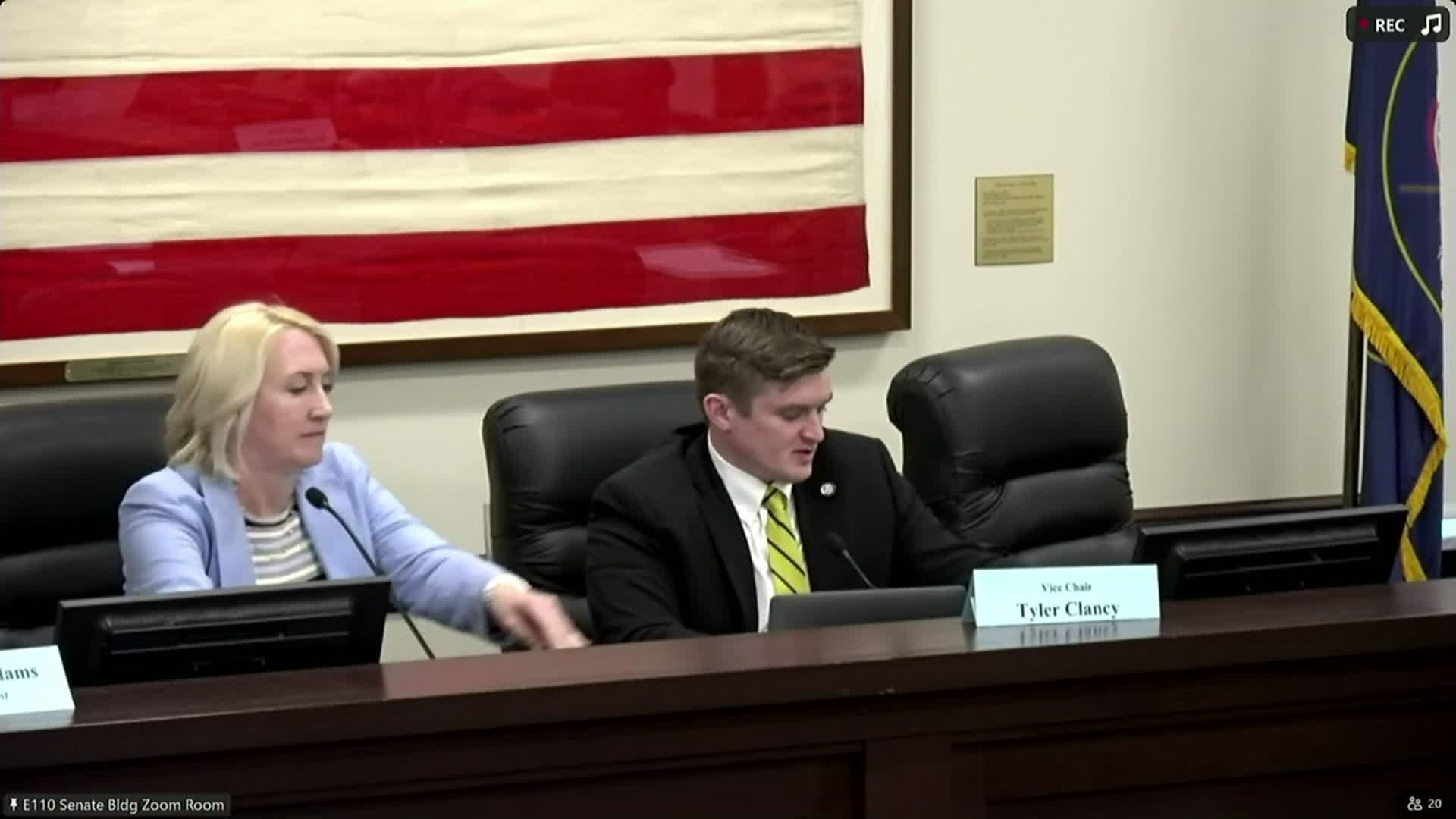
Representative Clancy proposed and the committee adopted an amendment to preserve a discrimination-related reference that public commenters had flagged as problematic in the draft. Following debate and additional remarks, the committee held a roll-call vote and reported the motion to favorably recommend sub 2 as amended by a tally reported on the record as 8 to 3. Several members spoke afterward to recognize the intensity of public testimony and the need for careful application of the law.
The measure will proceed to the full House; committee discussion and public testimony indicate it will likely generate continued floor debate and possible legal analysis on civil-rights implications.