TDCJ board approves new inmate correspondence rules to curb drug‑laced books
Loading...
Summary
The Texas Board of Criminal Justice voted to revise inmate correspondence rules requiring softback, new‑condition books and an advance‑notification portal after staff and OIG reported synthetic‑drug lacing in mailed and donated books and a spike in overdose deaths. The changes take effect April 1 for certain provisions.
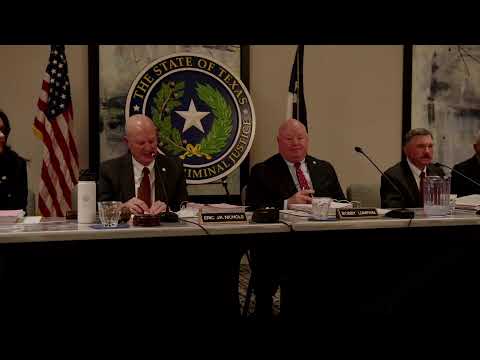
The Texas Board of Criminal Justice on Feb. 26 approved changes to board policy 3.91 that will restrict many books sent into TDCJ facilities and require advance notice from senders, a move agency leaders said is aimed at stopping criminal organizations from smuggling drugs into prisons.
TDCJ Chief Programs Officer Jason Clark told the board staff discovered 8,385 books that tested positive for drugs in 2025 and that drug exposures have contributed to inmate overdose deaths; he said 78 overdose deaths were confirmed through autopsy results in calendar year 2025. Clark said hardback books and stained or frayed used books are being exploited—spines and covers can hide contraband and stains that look benign can contain illegal narcotics.
"Criminal organizations are using the spines and the covers to hide drugs," Clark said. "We're finding labs that lace books and other items destined for our mailrooms." He proposed, and the board approved, policy language requiring softcover publications in new condition for mail sent from publishers, bookstores or publication suppliers, an advance‑notification portal for family/friends who want to send books, and a centralized process for donated books in cooperation with Windham School District.
General Counsel Stephanie Greger said the revisions include definitions for educational materials, legal correspondence and a narrowly drawn definition of "lewd visual material" to mirror recent penal‑code changes. She said exceptions will be provided so inmates enrolled in continuing education courses may still receive hardback books if a softback version is unavailable.
The board discussed operational impacts and access. Pastor Nate Sprinkle and other members pressed agency staff to keep the public's process simple; Clark said the proposed portal will be similar to the visitation portal and will require senders to register once, have identity validation, and provide basic book metadata so mailrooms can be more efficient and capture better statistics. TDCJ staff said they hope the portal will be ready by the end of summer and that the softback/new‑condition requirement would go into effect April 1 to allow training and public notice.
Inspector General Lance Coleman described related enforcement activity, including discovery of organized labs and seizures connected to book‑based smuggling. The board framed the measure as an effort to balance legitimate reading access with staff and inmate safety. Chair Eric Nichols said the agency will continue exploring complementary measures—public education about risky channels, volunteer and library donation processes, and digital options—that preserve access while reducing risk.
The board adopted the revisions by voice vote. The approved changes also direct agency staff to develop implementation timelines, the advance notification portal, and public guidance for senders and library/donation pathways.
What happens next: TDCJ will begin an education campaign for families and organizations about the new requirements and the planned portal; policy language provides limited exceptions for educational programs and legal mail protections remain in force. The board requested follow‑up updates on implementation and data on any changes in contraband interdictions.