Get Full Government Meeting Transcripts, Videos, & Alerts Forever!
Get email alerts on the Tribal Legislation topic
No spam. Unsubscribe anytime.
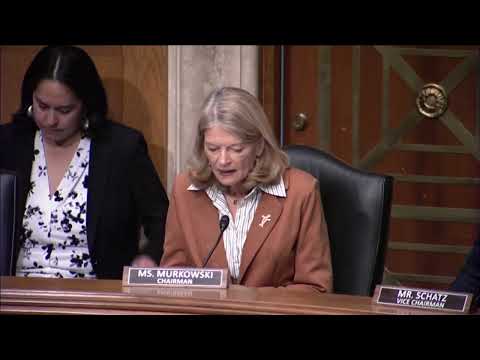
Chair highlights tribal-forestry, veterinary-services, and Indian boarding school commission bills
Summary
An unnamed committee leader outlined bills they sponsor, including "S 7 19" on tribal forestry cooperation, "S 6 20" on public-health veterinary services for native villages, and "S 7 61" to create a commission on Indian boarding school policies to pursue truth and healing.
An Unidentified Speaker on the Senate Committee on Indian Affairs described several bills they sponsor, framing them as measures to advance tribal self-determination, public health, and reckoning with the legacy of federal Indian boarding schools.
The speaker described "S 7 19" (transcript reads "bridal forestry") as legislation to further cross-boundary forestry objectives with the U.S. Forest Service and the Bureau of Land Management while strengthening self-determination by allowing tribes and Alaska Native Corporations (ANCs) to provide administrative management for Tribal Forest Protection Act (TFPA) projects using "638" contracts. The transcript does not spell out statutory citations; those program names and contract references are not fully expanded in the provided text.
On public-health veterinary services, the speaker said "S 6 20" would "bring spading and neutering to native villages to get a handle on rabies and other diseases that are endemic in communities in my state and on some of our reservations." The transcript uses the phrase "spading and neutering"; standard terminology is "spaying and neutering."
The speaker also said "S 7 61" would establish a commission on Indian boarding school policies to bring "truth and healing" to Native people and address intergenerational trauma associated with the boarding school legacy.
Why it matters: The bills touch on natural-resource cooperation, public-health services in native villages, and a federal process to study and respond to the boarding school legacy — all issues that affect tribal self-governance and wellbeing. The transcript does not include bill text, sponsors' full names, congressional bill numbers in standard formatting, fiscal notes, or any votes.
Next steps: The chair concluded the opening remarks and turned the meeting to Vice Chairman Schatz for further comments; no votes or formal actions are recorded in these segments.