Lifetime Citizen Portal Access — AI Briefings, Alerts & Unlimited Follows
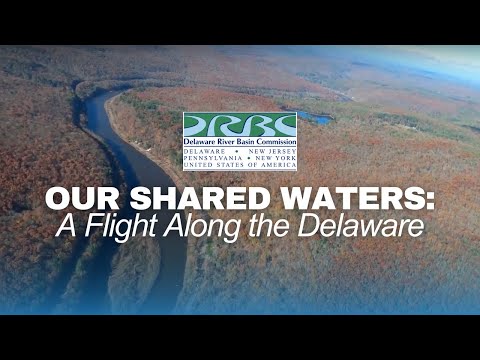
Narrated overview: Delaware River Basin, its uses, threats and the DRBC’s role
Loading...
Summary
A single-speaker narrative described the Delaware River Basin’s geography, key statistics, pollution history, monitoring priorities and the Delaware River Basin Commission’s role, including a recent ban on fracking and ongoing work on contaminants, salt intrusion, PCBs and climate risks.
Unidentified Speaker delivered a narrated overview of the Delaware River Basin, describing its geography from the Catskills in New York to the Delaware Bay and noting the basin is traditional Lenape territory. “We are all one basin,” the speaker said, framing the presentation around shared stewardship.
The speaker gave several grounding statistics: the basin covers about 13,539 square miles (larger than Massachusetts and Connecticut combined) and the main stem runs roughly 330 miles. Three major headwater reservoirs (Cannonsville, Pepacton and Neversink) feed downstream flows; together they supply roughly half of New York City’s drinking water. The basin supplies water to more than 14 million people, about 4% of the U.S. population, including residents of New York City and Philadelphia.
The presentation outlined the Delaware River Basin Commission (DRBC), noting it was created in 1961 by agreement among the four watershed states and the federal government and that it oversees river water quality and streamflow across the basin. The speaker said advisory committees help formulate policy and referenced a recent DRBC decision to enact a ban on fracking within the watershed (details of the vote or implementation timeline were not specified in the transcript).
The talk reviewed the basin’s pollution history and recovery: severe low-oxygen and sewage problems in the mid-20th century impaired fish runs near Philadelphia, but progress followed the DRBC compact, the Clean Water Act and investments in treatment plants. The speaker said DRBC-led and partner efforts have reduced PCB discharges by about 76% since 2005 in estuary states, while noting PCBs persist in sediments and continue to drive fish-consumption advisories.
Emerging threats described included nutrient and bacterial pollution, litter, microplastics and per- and polyfluoroalkyl substances (PFAS). The speaker also emphasized the daily monitoring of the “salt front” — how far upstream ocean salt intrudes — because salt can harm water intakes near Philadelphia; the 1965 drought was cited as an example when the salt front approached critical intakes.
Economic and cultural notes included the river corridor’s small towns and recreational economy in the upper basin, and the Delaware River Port Complex in the lower basin, which the speaker said supports about 190,000 jobs and more than $85 billion in annual economic activity. The talk referenced living-shoreline projects, ecosystem restoration supported by philanthropic funds (including the William Penn Foundation) and federal restoration dollars routed through the Delaware River Basin Restoration Program.
On climate, the speaker said an Advisory Committee on Climate Change will counsel commissioners about likely impacts — more flooding, more drought and sea level rise — and urged a concerted, equity-focused effort across public, private and philanthropic partners to protect the basin for future generations.
The presentation mixed historical context, current monitoring priorities (PFAS, PCBs, salt intrusion) and institutional roles, and closed with a call to collective stewardship and continued investment in water quality and resilience.