Lifetime Citizen Portal Access — AI Briefings, Alerts & Unlimited Follows
Appellate court weighs jury‑bias claims and 'first‑aggressor' instruction in State v. Marquez Jarrell Echols
Loading...
Summary
At oral argument, defense counsel urged that juror letters and deliberation behavior raised implicit‑bias concerns and that a first‑aggressor instruction improperly characterized the defendant; the state argued the evidence (refusal to leave and a forceful shove) supported the instruction. The court took the case under advisement.
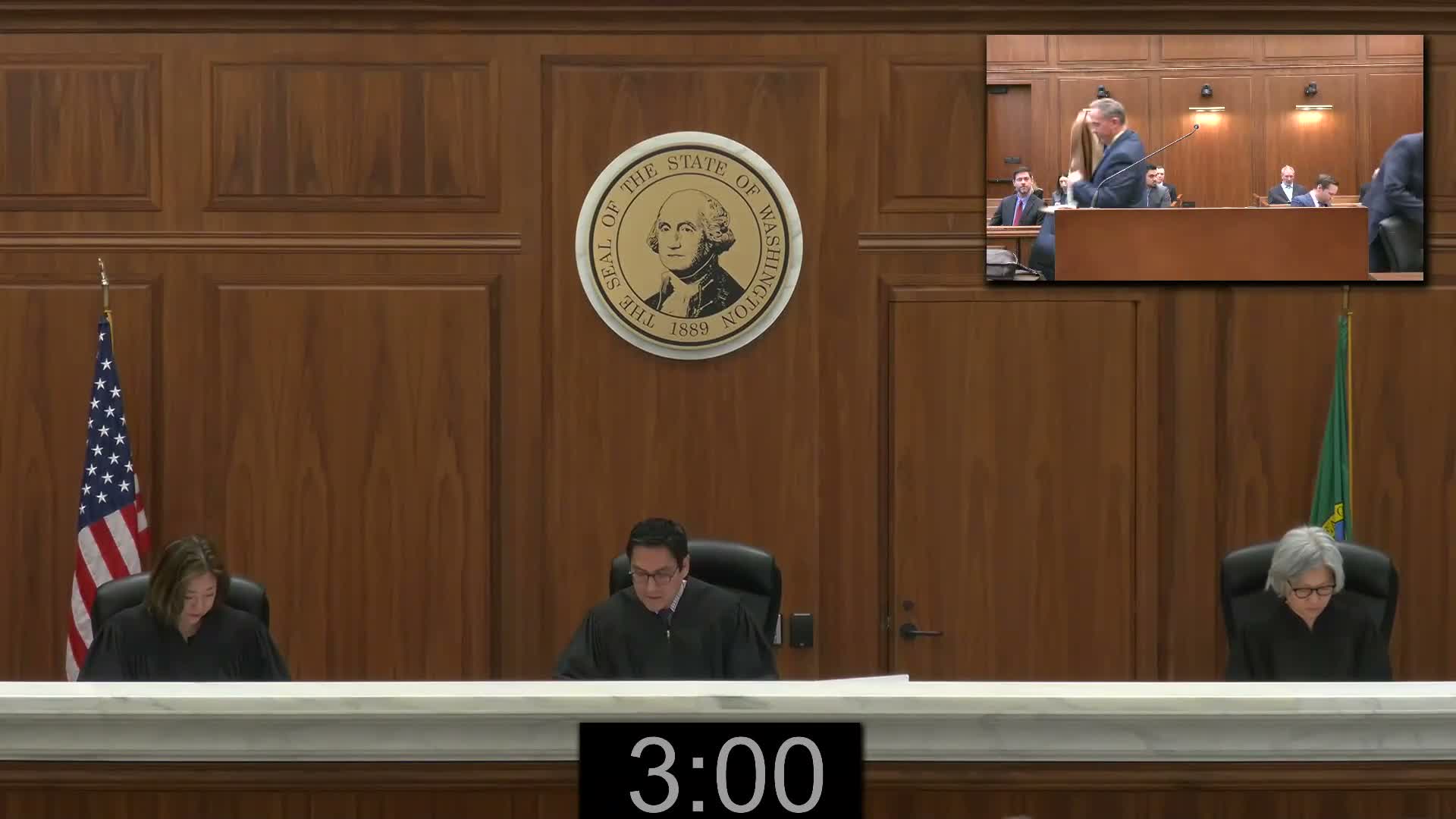
Catherine Clark, defense counsel for Marquez Jarrell Echols, told the appellate panel that the trial court erred by giving a first‑aggressor jury instruction and by allowing an off‑the‑record inquiry into juror concerns that Clark said indicated implicit racial bias.
"To characterize Mr. Echols as the first aggressor and angry black man ... suggests a bias," Clark said, arguing juror letters and a juror's later report of eye‑rolling during deliberations merited a formal, on‑the‑record inquiry and possible remand.
The argument centered on two questions: whether the trial record contained sufficient factual support for a first‑aggressor instruction, and whether post‑trial notes and conversations with jurors created a prima facie showing of racial bias that would require the court to conduct a searching, supervised evidentiary hearing.
Anne Summers, representing the state of Washington, replied that the record contained evidence supporting the instruction. "The defendant's belligerent refusal to leave the bar ... entitled the state to a first aggressor instruction," Summers said, noting video and witness testimony the state said showed the defendant refusing to move toward the door and then forcefully shoving a bartender.
Summers urged the court to apply the framework from cases the parties cited — including Pena‑Rodriguez, Jackson and Berry as discussed in argument — under which a court proceeds to an evidentiary hearing only when there is admissible, prima‑facie evidence of juror racial bias, such as juror affidavits or an on‑the‑record observation by the trial court. She told the panel that the off‑the‑record conversations counsel had with jurors produced no sworn affidavits and therefore could not satisfy that standard.
Bench members and counsel also debated process questions. One participant noted that, in this case, counsel spoke to jurors outside court supervision and without oath; Clark and others said that procedure risked tainting deliberations and that the court itself should have handled any inquiry once jurors submitted letters. Clark said the juror letters initially sought leniency and did not explicitly reference race, but later information and a juror's account of eye‑rolling during deliberations raised concerns about implicit bias.
Summers told the panel that when a juror was brought before the court and questioned on the record, the juror denied being treated differently or hearing explicitly racial comments; the juror mentioned sympathy for the bartenders and referred to their smaller stature.
Defense counsel asked the court to remand for further review of whether the trial court's combination of the instruction and the post‑trial process produced a constitutional problem. The panel heard argument on those points and then announced it would take the matter under advisement. No decision was announced at the argument.
The court formally submitted the case for decision; next steps will follow the appellate calendar and any published ruling will specify whether the matter is remanded for an evidentiary hearing or whether the instruction and record as admitted are upheld.