
Board aims to modernize enforcement tracking and better communicate complaint outcomes
Get AI-powered insights, summaries, and transcripts
Subscribe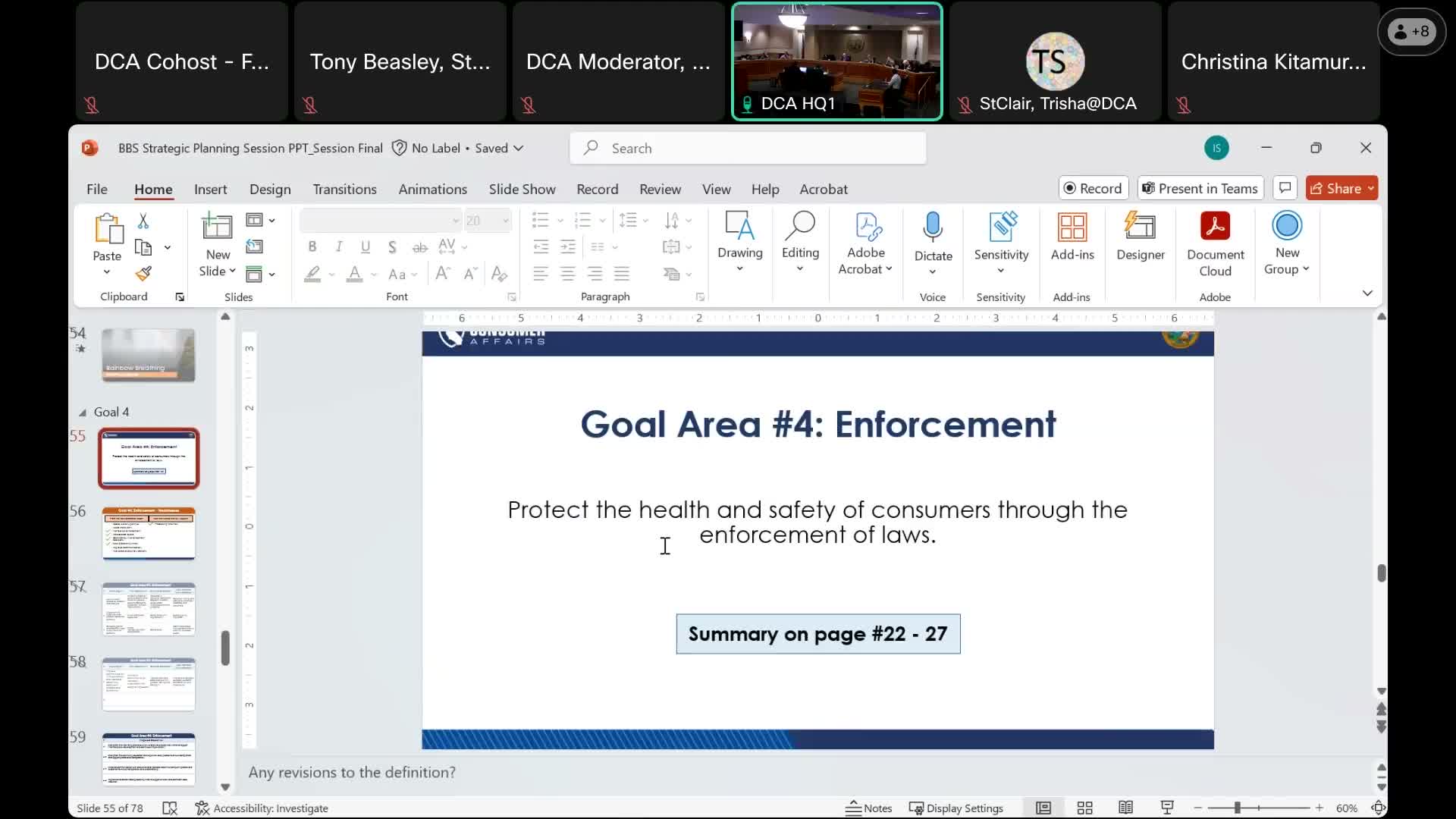
Summary
The board reviewed enforcement objectives to monitor disciplinary trends, strengthen continuing education and supervisor audits, and improve communication with complainants; members raised concerns about perceived disproportionate impacts on BIPOC populations in DUI-related enforcement.
The Board of Behavioral Sciences spent part of the strategic planning session discussing enforcement objectives aimed at protecting consumers through improved monitoring, audits, and communications.
Staff proposed objectives to strengthen monitoring of violations and disciplinary trends, split continuing education and supervisor audit work into discrete objectives for tracking, and improve communications with complainants about the complaint process and case outcomes. Board members suggested refining language to focus communications on complainants and to increase transparency about enforcement processes and outcomes.
Several members raised stakeholder feedback that board enforcement has felt overly punitive—especially regarding DUI‑related offenses disproportionately affecting BIPOC licensees or registrants—and noted the board does not collect race or gender data in its current enforcement dataset. Members discussed limitations imposed by sentencing guidelines and the extent of board authority, and suggested outreach or explanatory materials to clarify enforcement processes and outcomes to the public.
Staff will draft task items to improve complaint communications (plain‑language explanations of procedures and outcomes, web resources) and to examine case processing times with a focus on staffing and resource constraints that affect timeliness.
Board members emphasized transparency and better consumer education as tools to strengthen public protection while recognizing statutory and data constraints in enforcement practice.