Get Full Government Meeting Transcripts, Videos, & Alerts Forever!
Get email alerts on the District Budget Borrowing topic
No spam. Unsubscribe anytime.
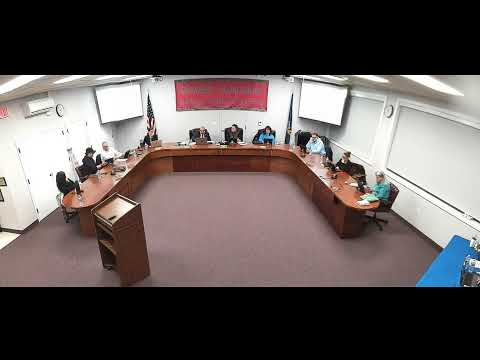
South Country board authorizes pursuit of special legislation to allow up to $12 million borrowing for budget shortfall
Summary
The South Country Central School District board unanimously approved a resolution authorizing administrators to seek special legislation that would allow the district to borrow up to $12 million to address an estimated $10 million structural deficit. Administrators said the authorization starts the legislative work but does not obligate the district to borrow the full amount.
The South Country Central School District Board of Education unanimously voted Jan. 20 to authorize administrators to pursue special legislation that could permit the district to borrow up to $12 million to address an estimated $10 million structural operating deficit.
The move, approved as consent item C7, authorizes district officials to draft the proposed legislation and to work with legislators to seek insertion of the measure in the state budget. Trustee Calderon moved the resolution; Vice President DeLillo seconded. President Hayes called the question and the measure passed unanimously.
“This particular resolution gives the district the authority to go ahead to seek special legislation, work with our legislators to present it to the governor, try to get this bill in the state budget,” an administration official said during the discussion, explaining that if the bill is not included in the state budget the district may need to pursue other legislative avenues.
Administrators and bond counsel told trustees the authorization does not itself obligate the district to borrow the full $12 million. “Now just because the resolution goes up to $12,000,000, it doesn't mean that the district is going to borrow $12,000,000 for the sake of borrowing $12,000,000,” the administration said, adding that borrowing could be staged via bond anticipation notes or other financing tools.
Board members and administrators framed the authorization as a contingency and a timing issue: with the state budget process under way, the board would have more options if it moved quickly. Administrators said work on sponsorship and drafting would begin immediately if the board approved the resolution.
The authorization comes amid the district’s presentation of a multi-year recovery plan and a detailed budget timeline. The administration projected an approximate $10 million shortfall in revenues over expenditures and noted the district finished the prior fiscal year with a negative $1.8 million unassigned fund balance. Officials flagged changes in state aid—about $1,141,000 less for 2026–27 after adjustments—and a projected increase of roughly $3,200,000 in health insurance costs for the coming year.
Administrators cautioned trustees that those pressures, combined with declines in building aid (noted at about $1.2 million) and other revenue shortfalls, mean the district will need to consider a combination of midyear reductions, operational efficiencies and potential deficit financing to restore fiscal balance. The administration outlined milestones: a March 1 tax-levy limit submission, April 22 anticipated budget adoption, a May 6 budget hearing and the May 19 budget vote.
The superintendent and business official emphasized the board still has flexibility on amounts and timing. “If we need to borrow $8,000,000, we can start out by borrowing $8,000,000,” an administration speaker said, describing how bond anticipation notes can be renewed and how borrowing could be phased.
During public comment, Gavin Rogers, an assistant principal at Brookhaven Elementary who said he faces separation from his position at the end of the week, urged the board to weigh the human and educational consequences of midyear staff reductions. “When leadership and support positions are reduced or shifted, that work does not disappear,” Rogers said. He described how reductions can lead to delayed interventions, heavier workloads for remaining staff and strains on student supports.
The board also approved a second reading of Policy 45.26 (computer use and instruction), curriculum items G1 and G2, personnel items H1–H16 and business items I1 and I2; those motions passed unanimously. Trustees asked clarifying questions on several agenda items, including the labeling of a curriculum line item and whether some club stipends were being prorated because clubs were discontinued for lack of participation.
Administrators said the controls office and the Office of the State Comptroller will be engaged in oversight and that the next weeks will be intense as the district finalizes revenue estimates and the staffing analysis. The board did not take any additional borrowing action at the meeting beyond authorizing pursuit of special legislation.