Get Full Government Meeting Transcripts, Videos, & Alerts Forever!
Get email alerts on the Firearms Regulation topic
No spam. Unsubscribe anytime.
Senate advances bill aimed at 3-D-printed 'ghost guns' despite industry concerns
Summary
The chamber voted to advance engrossed substitute House Bill 2320 to the floor; backers said it makes untraceable 3‑D‑printed firearms harder to produce, while at least one senator warned of unintended consequences for engineers and companies using 3‑D printing.
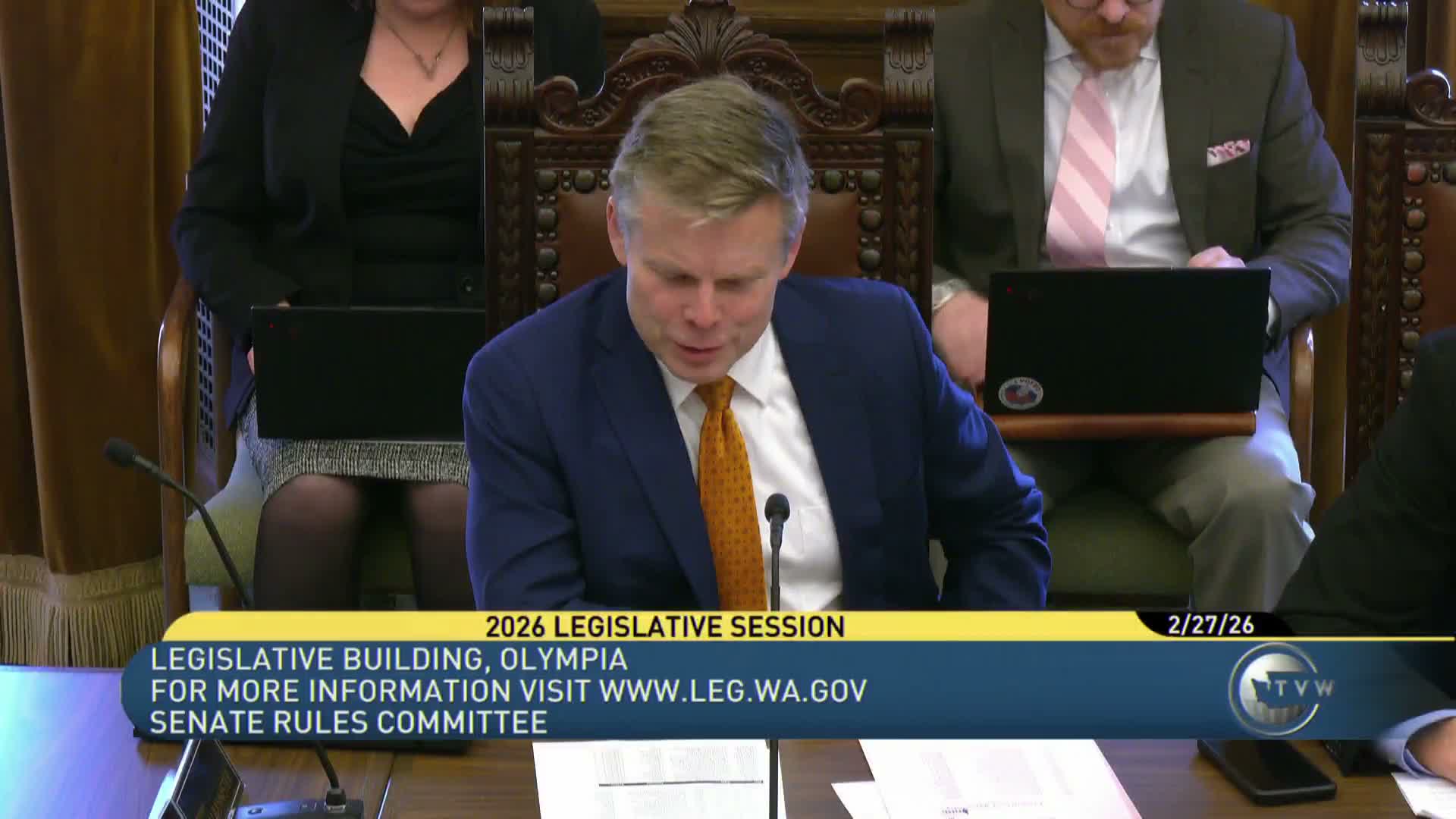
Senator Petersen moved to advance engrossed substitute House Bill 2320 from the white sheet to the floor calendar, saying the measure targets so-called ghost guns and seeks to make untraceable firearms harder to produce. The motion carried by voice vote.
The bill, as described on the floor, focuses on challenges posed by 3‑D‑printed firearms: "This is a bill regarding the challenge of what are sometimes referred to as ghost guns, 3‑D printed guns, and makes it more difficult for those untraceable firearms to be produced," Senator Petersen said.
Senator Short voiced concern about the bill's potential breadth and its impact beyond the intended target. "This bill has unintended consequences beyond what it's trying to do," Short said, adding that engineers and companies that use 3‑D printing in legitimate engineering contexts had raised worries about how the measure might affect their work.
Supporters characterized the legislation as a public-safety measure aimed at reducing the production of unserialized, untraceable firearms. Opponents cautioned the chamber that the bill could sweep in legitimate engineering uses of additive manufacturing and urged further refining to avoid harming businesses and research activities.
The motion was advanced by voice vote; no roll-call tally was recorded on the floor. The bill will be considered on the floor calendar for further action.
The next procedural step is floor consideration; the transcript does not record a final passage or a roll-call vote on the bill during this session.