Lifetime Citizen Portal Access — AI Briefings, Alerts & Unlimited Follows
State will not pause Advanced Clean Trucks; officials promise compliance flexibility and new grants
Loading...
Summary
Asked about pausing Washington's Advanced Clean Trucks rule, Ecology's director said the state is not delaying implementation but is developing compliance flexibility for heavy-duty trucks and highlighted about $130 million in Climate Commitment Act funding for grants and charging infrastructure.
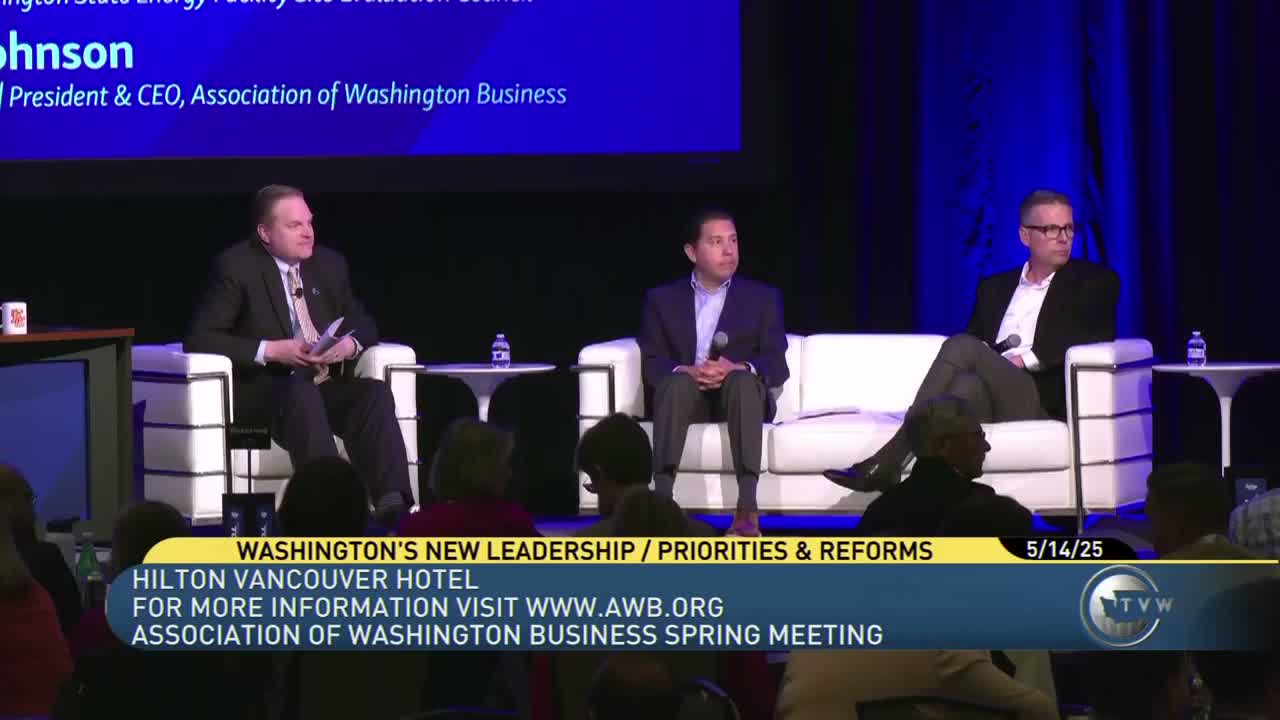
During a question-and-answer session at an AWB panel, a FedEx representative asked whether Washington would pause or change the state's Advanced Clean Trucks (ACT) rule in light of actions elsewhere and concerns about heavy-duty fleet duty cycles.
Evan Onetta, identifying himself as a FedEx representative, said older truck operators face barriers: "With ACT on the books, we literally have a policy where the good is the enemy of the perfect...they have to go buy an electric truck that may not meet the duty cycles they need."
Casey, director of the Washington State Department of Ecology, responded that the state is not exploring a delay. "We are not exploring a delay in the implementation of that program," she said, adding that Ecology has worked with industry to find ways to add compliance flexibility, particularly for class 7 and 8 semi-truck categories.
Casey said the state Department of Transportation, using Climate Commitment Act funds, has secured about $130,000,000 to establish a new grant program that will help close the cost and infrastructure gap for fleet transitions and pay for charging infrastructure. She said the administration is preparing a new rule to provide some flexibility while preserving the program's contribution to the state's greenhouse-gas-reduction requirements.
The session did not include a vote or any formal change to the ACT rule; officials described continuing conversations with industry and a plan to announce further details on compliance options and grant rollout.
The exchange illustrates the tension between technology-driven emissions rules and industry concerns about equipment readiness and charging availability; the state signaled it will seek a mix of regulatory flexibility and grant-funded infrastructure support rather than a blunt delay.
No formal action was taken at the meeting.