Get Full Government Meeting Transcripts, Videos, & Alerts Forever!
Get email alerts on the Social Security Offset topic
No spam. Unsubscribe anytime.
Attorneys spar over how to calculate Social Security offset in workers'compensation case
Summary
At oral argument, lawyers for injured workers and the Department of Labor and Industries disputed whether actuarial pension reductions should be included when computing the combined benefits cap that limits offset of Social Security retirement benefits; the court submitted the case for advisement.
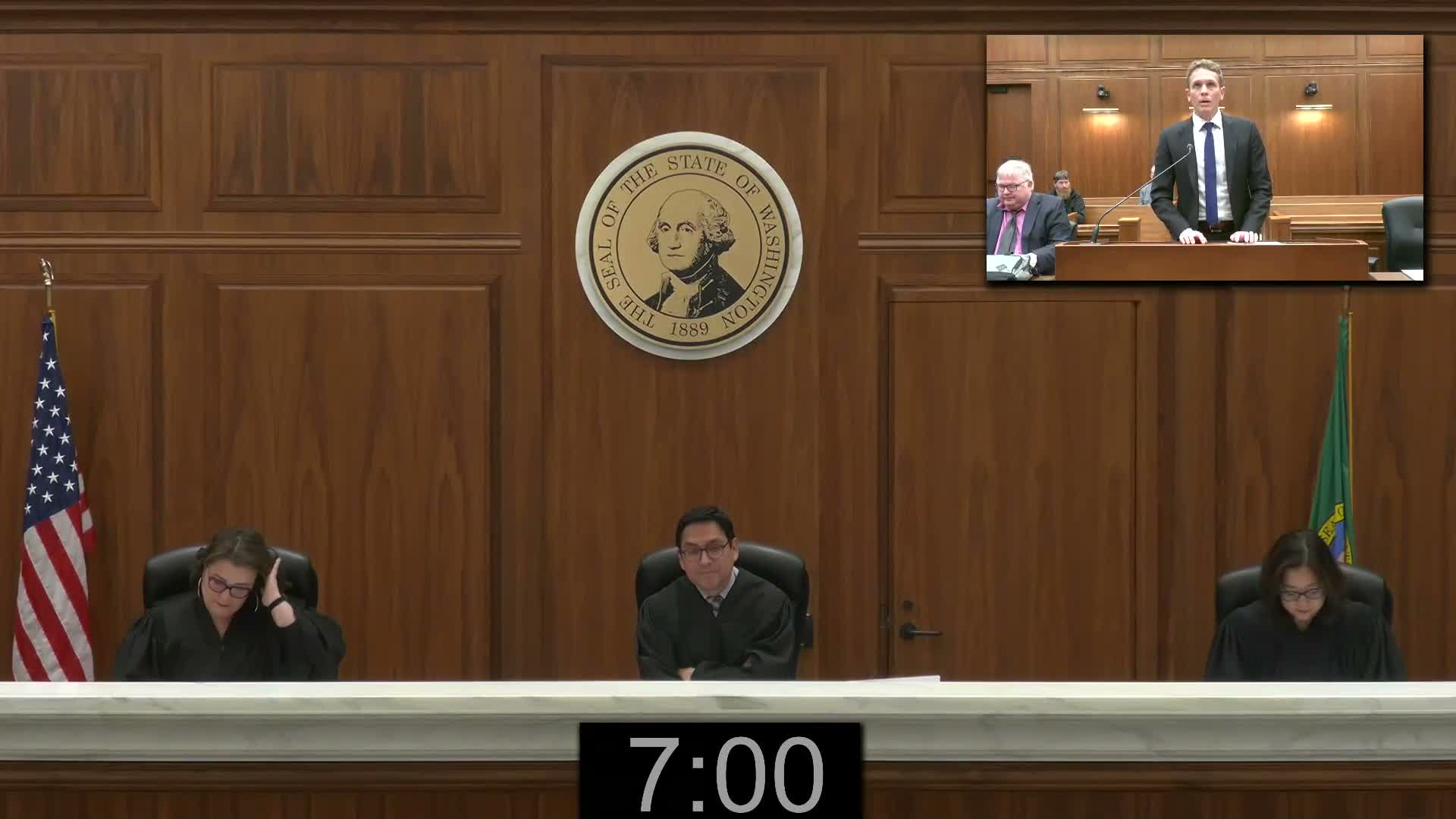
Bridal Wright, counsel for injured workers and a surviving spouse, and Steve Vineyard, assistant attorney general for the Department of Labor and Industries, argued competing readings of the Social Security offset provision during an oral argument before a judicial panel. The dispute centers on whether actuarial reductions that result from a worker's election of a pension survivorship option should be counted when setting the combined benefits limit that constrains the Department's ability to offset Social Security retirement benefits.
Wright told the court the combined benefits cap should be set by "the amount the worker may be entitled to under the Act" and should not be reduced by an actuarial pension election in a way that lowers the statutory cap. She argued the Department's construction "disincentivizes workers from transitioning to pensions," can "prolong medical treatment, prolong claims being open," and ultimately benefits the Department at workers' expense. Wright asked the panel to interpret the Industrial Insurance Act in a manner that preserves the statutory entitlement and to apply liberal construction in favor of workers where ambiguity exists.
Vineyard, representing the Department, countered that the plain language of the Industrial Insurance Act supports treating actuarial reductions as part of a worker's entitlement under the title. He said actual pension reductions "are part of the title" and therefore part of the entitlement calculation that the statute references, and argued the statute does not support pretending there was no reduction when setting the cap. Vineyard told the court the tradeoff created by the pension option'survivorship election and a corresponding actuarial reduction was a legislative choice and that policy objections are for the legislature.
The panel probed both sides on statutory structure and cited specific subsections that set the order of reductions. Counsel debated whether the statute's ordering language requires taking actuarial reductions first and then applying an independent cap or whether the cap must reflect the pre'reduction entitlement. The workers'counsel pointed to the 1986 enactment sequence, saying the pension option and offset regimes were adopted together and that sequencing and context support his reading.
After extended questioning, the court "took the case on advisement" and submitted the matter. No ruling was made at the argument; the court will decide after reviewing the briefs and the record.
The argument touches on the calculation of statutory caps in workers'compensation cases and could affect how much compensation surviving spouses and permanently disabled workers receive when a Social Security retirement offset applies. The panel moved on to the next calendar matter following submission of the case.