Lifetime Citizen Portal Access — AI Briefings, Alerts & Unlimited Follows
Court hears arguments over enforceability of unsigned venue agreements in Aero Fish v. Seattle Arena Holdings
Loading...
Summary
In oral argument on a motion to dismiss, counsel for Aero Fish urged that course-of-dealings and signed components of the contract package could permit a claim to survive, while opposing counsel said the MOU was explicitly nonbinding and key agreements (lease, master sublease, management agreement) were unsigned. The court took the case under submission.
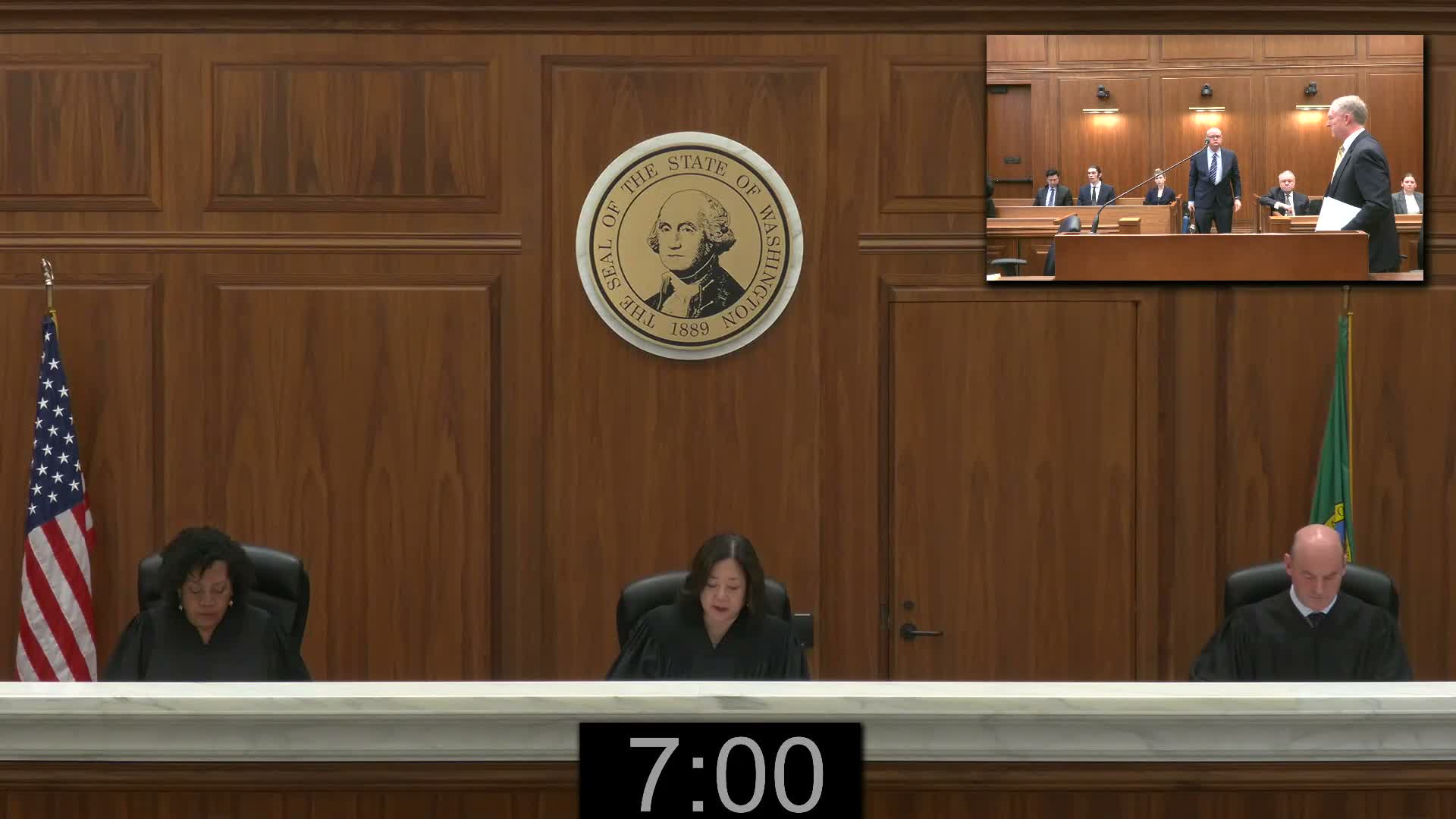
The court heard arguments over whether unsigned, interlocking agreements and a nonbinding memorandum of understanding can support claims in Aero Fish v. Seattle Arena Holdings, and then took the case under submission.
Gary Manca, counsel for appellant Aero Fish, told the court the controlling question on a motion to dismiss is whether "this court is convinced beyond a reasonable doubt that this case is the rare instance where it's impossible to conceive that the plaintiff has a claim." He urged the panel to view the complaint together with the documents and to defer factual disputes — including the parties' course of dealings and subsequent conduct — to later proceedings.
The respondent, represented in argument by David Perez, emphasized the written record. Perez said the memorandum of understanding expressly states it is nonbinding and that several key documents that would generate revenue or define management authority were never executed. "You don't have a master sublease," Perez said. "You don't have a lease. The management agreement was signed by nobody." He told the court the consulting agreement the parties signed was conditioned on a signed lease by 5 p.m. on Sept. 30, 2023, a deadline the record shows was not met.
The parties disputed the sufficiency of the common-law claims. Perez argued plaintiffs had been paid for the services cited in the briefs and that the unjust-enrichment allegations lack the specificity required even for notice pleading: the defense repeatedly asked for invoices, dates and amounts showing what the plaintiffs say they were not paid for. Manca responded that the operating agreement and the parties' conduct — including LLC registration and reimbursements — could show mutual assent or an implied-in-fact partnership that should survive dismissal.
Panelists pressed both sides on legal precedent and practical consequences. A panelist asked who bore responsibility for payments made during negotiations, noting that in many deals one party advances costs while the parties continue to negotiate. Counsel also debated whether out-of-state authority was persuasive and whether Washington law permits enforcement of multi-party contracts despite missing signatures in certain circumstances.
Perez warned that the plaintiffs were effectively "suing on draft agreements" with interlocking contingencies — lease, operating agreement and management agreement each referencing the others — and argued the statute of frauds and integration/signature clauses limit attempts to use oral testimony to fill critical gaps. Manca stressed that Washington decisions permit examination of subsequent conduct and that the complaint, as framed, alleges facts that could support promissory estoppel or an implied agreement.
At the close of arguments the court thanked counsel and announced it would take the matter under submission. The case now awaits the court's written disposition.