Get Full Government Meeting Transcripts, Videos, & Alerts Forever!
Get email alerts on the Election Challenges topic
No spam. Unsubscribe anytime.
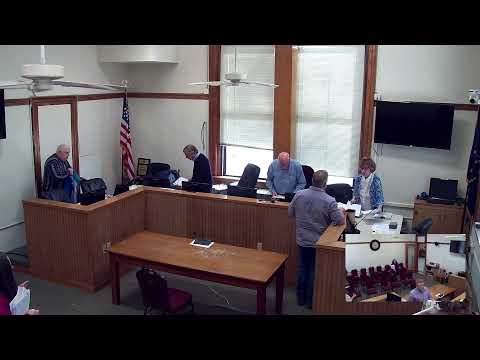
Owen County election hearing examines multiple candidacy and finance filings; board to issue findings after reconvening
Summary
Challengers accused several local candidates of incomplete or inaccurate CAN‑2 and campaign‑finance filings; candidates said many shortcomings were clerical errors and amendments were being prepared; the Owen County Election Board recessed and will issue written findings after a continuation at 9 a.m. tomorrow.
Tony Volker, chairman of the Owen County Election Board, opened a multi‑candidate hearing on Jan. 28, 2026, to consider challenges to the filings of multiple primary election candidates and to hear testimony about alleged deficiencies in candidacy and campaign‑finance paperwork. Attorney Richard Lorenz, serving as counsel to the board, told the room the proceeding would be informal and that the board would not decide matters the same day but would reconvene the following morning to issue written findings.
The bulk of the hearing centered on CAN‑2 (declaration of candidacy) and CAN‑12 (statement of economic interest) forms and related CFA‑1/CFA‑4 campaign‑finance reports. Challenger Pamela Rogers told the board she had filed CAN‑1 petitions alleging that several candidates left required items blank or answered inaccurately, and that campaign‑finance schedules showed missing or inconsistent records. Rogers said her packet of highlighted exhibits showed cases in which candidates either failed to initial items 7–13 on the CAN‑2 form or did not timely file CFA‑1 organization statements and related CFA‑4 reports, and she asked the board to disqualify candidates, order independent audits, or refer possible enforcement action where warranted.
"If a candidate swears to having filed all reports from prior campaigns, then this statement under oath removes auditing and investigation by the CEB for those new CAN‑2s," Rogers told the hearing, and she urged the board to enforce statutory requirements and pursue audits where records were missing.
Several candidates who were challenged acknowledged omissions but said they were inadvertent clerical errors. Sam Hobbs, one of the earliest witnesses, testified that he and his spouse had recently prepared amended CFA forms and that there had been no intent to deceive. "There was no ill intent or deceitfulness," Hobbs said, acknowledging earlier paperwork omissions and saying he had brought amendments to correct them.
Christie Risk, county chair of the Republican Party, urged the board to balance enforcement with practicality, warning that automatic disqualification for every clerical mistake could deter prospective candidates. "If we allow every mistake to become a disqualifying event, we won't have an election," Risk said.
Other contested issues included party‑membership eligibility for party ballots, raised by Risk in challenges to two candidates whose primary voting records did not show two prior party primary votes; a residency challenge to a candidate who listed a property that the assessor’s records flagged as a vacant lot; and several challenges asserting inconsistent or missing CFA‑1/CFA‑4 reporting that, challengers said, made it impossible to reconcile receipts and expenditures without audits.
Amy Meyer, the incumbent county surveyor, was also challenged on the completeness of her CAN‑12 statement of economic interest, the timing and naming on her CFA filings, and whether she had completed training or certification the challenger said is required for the office. Meyer said she had moved residence after storm damage, that she attends continuing‑education courses with a licensed surveyor and works as a survey technician, and that any filing omissions were unintentional.
Board counsel Richard Lorenz and other members repeatedly noted that campaign‑finance audits and enforcement of CFA reporting often require separate proceedings and additional time to assemble findings of fact. Several candidates said they would file or had prepared amended reports and asked the board to consider those when it makes its determinations.
Before adjourning, the board voted to recess and reconvene at 9 a.m. the next day to deliberate and issue written findings. The chair reminded panelists that board members would not confer outside public session until the public meeting to decide the matters.
The board did not make final rulings during the Jan. 28 session; it scheduled formal discussion and votes for the reconvened public meeting tomorrow. Parties will receive written notice of the board’s determinations and of any procedural next steps or appeals deadlines once findings are prepared and filed.
What happens next: The board will reconvene at 9 a.m. tomorrow to discuss evidence, deliberate on each CAN‑1 challenge and related CFA issues, and vote on findings and any referrals. Any candidate adversely affected by the board’s written decision may have statutory appeal rights to circuit court within the time frame set by state law.