Lifetime Citizen Portal Access — AI Briefings, Alerts & Unlimited Follows
Appeals panel hears arguments over 3S Network’s fraud and tortious-interference claims
Loading...
Summary
A three-judge panel heard oral argument in an appeal by 3S Network Inc. over whether fraud and tortious-interference claims were time-barred and whether the court can assert personal jurisdiction over certain defendants. Attorneys disputed when 3S discovered key facts and whether prior filings waived defenses.
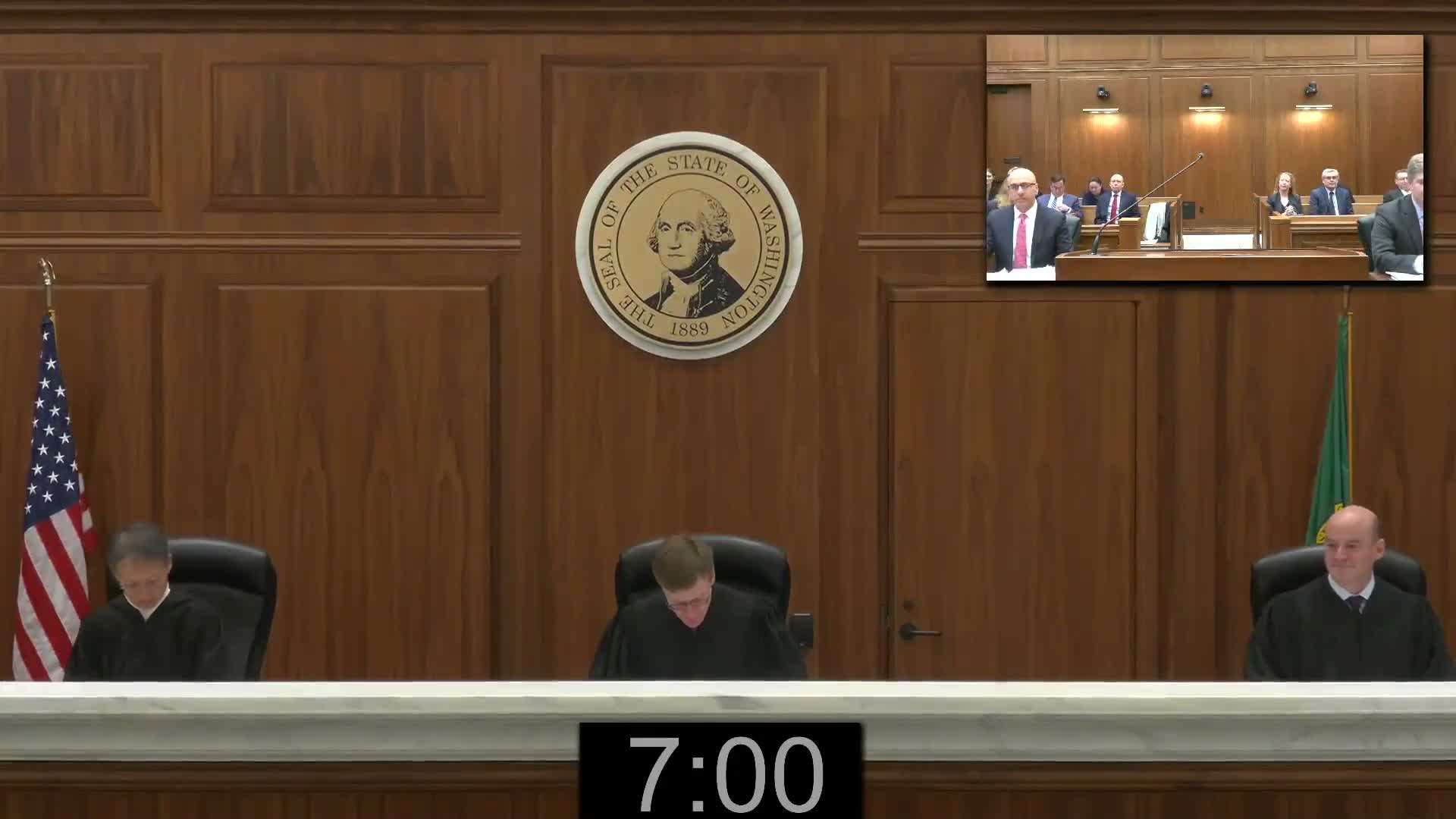
A three-judge panel of the state Court of Appeals heard oral arguments in an appeal by 3S Network Inc. over whether its fraud and tortious-interference claims were barred by the statute of limitations and whether the court can assert personal jurisdiction over some defendants.
"May it please the court, Theo Angelus for 3 s Network Incorporated," counsel for the plaintiff began, telling the panel he would focus on two issues: the limitations dismissal of tortious-interference and fraud claims, and respondents’ judicial-estoppel arguments. Angelus pointed the court to four primary sources in the record, including two declarations from CEO Saeed Dinesh and the Colby Lyday declaration, and argued those materials show the company exercised reasonable diligence and did not learn the full scope of the alleged misconduct until later.
The central factual dispute at argument concerned when 3S knew enough to file suit. Opposing counsel cited written admissions in the record and prior filings indicating 3S discovered fraud and some tortious interference around August 2016. "It is undeniable that plaintiff had knowledge of some of the tortious interference at the time of termination, which was in August 2016," one respondent’s brief noted, a point repeated by respondent counsel during argument.
Angelus countered that discoveries in 2016 amounted to awareness only that employees had left and formed a competing business, not that they were tortiously responsible for the loss of specific clients. He said forensic recovery of text messages and other investigative steps continued into 2016 and 2017 and that Colby Lyday’s later revelations supplied the additional facts necessary to support the claims. Angelus told the court the recovered messages "are in the record" and called the timeline complex, pointing to an August 2017 email (CP 210) as evidence that additional, potentially determinative events occurred after 2016.
Respondents’ counsel for the Taibbi respondents, Adam DuPage, argued that the respondents were dismissed from the case nearly five years earlier and that counsel effectively abandoned certain jurisdictional and timeliness arguments during the first appeal. DuPage pressed that prior filings and the procedural history could bar inconsistent positions now and maintained that, under the court’s precedents, the bulk of the alleged tortious acts occurred in California (the plaintiff’s principal place of business) and thus do not support specific jurisdiction in Washington.
A different respondent’s lawyer, Gary Manca (representing Sanisco and Nriahi Nejad), highlighted portions of the record he said show admissions by 3S that the company discovered fraud and tortious interference in August 2016 and emphasized a lack of documentary evidence of post-2016 diligence (for example, bank records or client outreach) in the record.
Throughout argument judges probed both sides on the legal standards. One panelist stressed that the proper inquiry for timeliness is what reasonably diligent investigation would have revealed, not only what counsel publicly stated at a prior hearing. Counsel for 3S replied that reasonable diligence had included internal forensic review, monitoring emails, and interviewing employees, but the paper record is limited and certain discoveries were not fully apparent until Lyday’s declaration.
DuPage invoked the Sea Haven line of authority to argue that, for personal-jurisdiction purposes, the relevant tortious acts and the locus of harm point to California where 3S is based. He said the record shows only a small number of contacts with Washington—two meetings and the recruitment of a Washington-based employee—which he argued are insufficient to supply the necessary ties to the forum for the intentional-tort claims.
The judges also asked about whether upholding time-bar dismissals as to two defendants would leave any viable claim against Taibbi; Angelus said the claims against Taibbi differ factually and procedurally because Taibbi did not join the motion below.
At the close of argument the court asked counsel to provide precise record citations for several disputed points; counsel offered CP citations (for example, CP 115–118, CP 210, CP 233) and the panel said it would include the arguments and the cited portions of the record in its review. The court did not issue a decision from the bench.
The panel took the matter under advisement and will issue a written opinion addressing whether parts of 3S’s case were time-barred, whether the earlier procedural history precludes the respondents’ arguments here, and whether the court has personal jurisdiction over the contested defendants.