Get Full Government Meeting Transcripts, Videos, & Alerts Forever!
Get email alerts on the Recovery Services topic
No spam. Unsubscribe anytime.
NNLM-supported peer coaching and library programs expand recovery access, presenters say
Summary
At a virtual NNLM Region 7 presentation, Riverbend and the Saratoga Springs Public Library described how NNLM/NLM seed funding helped expand a Recovery Coach Academy and launch a 'Read to Recovery' library collection, increased community referrals, and supported harm-reduction outreach.
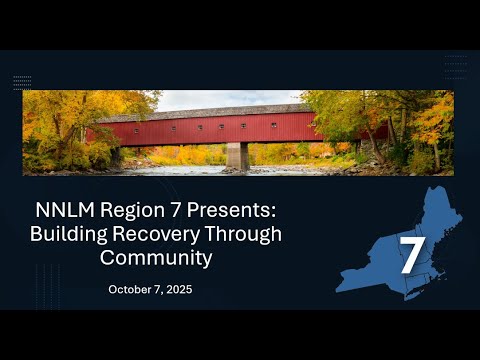
Benny Finch, education outreach coordinator for NNLM Region 7, opened a virtual session on building recovery through community and introduced two NNLM-supported projects that speakers said are widening local access to recovery resources.
Rich Hollott, director of recovery support services at Riverbend, described a Recovery Capital Investment grant from the Network of the National Library of Medicine (NNLM) that, he said, allowed Riverbend to expand its Recovery Coach Academy and increase the number of facilitators running the five‑day training. "We actually we're we're so surprised and pleased with how impactful and meaningful this funding has turned out for us," Hollott said, crediting the grant with enabling more frequent trainings and creating employment pathways for people with lived experience.
Hollott said the Recovery Coach Academy trains peer recovery coaches who provide nonclinical, recipient‑directed support across multiple settings, and that graduates have helped shift practices in emergency departments and other institutions. "We line up with the client," he said, arguing that peer coaches' lived experience builds trust, reduces stigma, and can help steer people toward treatment or other next steps.
Emily Martin, adult services librarian at the Saratoga Springs Public Library, described the library's Read to Recovery collection, a permanent row of recovery‑focused literature launched last May and seed‑funded by a $5,000 grant from the National Library of Medicine (NLM). The collection, Martin said, is "free to keep, no questions asked" and is intended as a low‑barrier pathway to community supports such as peer navigators and recovery outreach centers.
Martin also cited local public‑health data to make the case for library involvement: "Right now, we average about 3 nonfatal overdoses a day," she said of the county (which she said has a population of about 240,000). She credited increased access to harm reduction and community training with preventing fatal overdoses and described practical library strategies — from a visible stand at public events to an outreach van — for distributing test strips, Narcan, literature and referral cards.
Both presenters highlighted partnerships as central to their work. Martin described close collaboration with Healing Springs Recovery Outreach Center, which provides peer navigators and ER follow‑up after an overdose; Hollott described training emergency‑department staff and embedding recovery coaches where people often present in crisis.
During Q&A, Martin and Hollott discussed challenges including limited staff time, space and funding and, in Riverbend's case, a delay caused by changes to CCAR (Connecticut Community for Addiction Recovery) facilitator criteria that slowed certification and scheduling. Martin reported early project metrics: about $20,000 raised in grants and donations over 16 months, more than 1,000 books given away, and a collection that has grown to roughly 60 titles.
Panelists closed by sharing resources for libraries and communities: the 988 Lifeline, the Trevor Project, the Recovery Cafe Network and NNLM/MedlinePlus materials; organizers said slides and a handout with links would be posted after the session and noted an upcoming Region 7 class on providing mental health resources in libraries.
The NNLM Region 7 hosts said they will distribute the session slides, a LibGuide and handout with links to NNLM and NLM resources for attendees who want to replicate similar recovery‑focused programs in their communities.