Get Full Government Meeting Transcripts, Videos, & Alerts Forever!
Get email alerts on the Operating Referendum topic
No spam. Unsubscribe anytime.
Wausau School Board votes to put $8 million-per-year operating referendum on April ballot
Summary
After a district presentation on multi-year deficits and deferred maintenance, the Wausau School Board voted to place an $8 million-per-year, five-year nonrecurring operating referendum on the April ballot. Administrators said the measure could fund maintenance, HVAC and program supports while using levy space created by prior debt defeasance to avoid an added tax impact.
Wausau School District administrators told the board on Jan. 13 that the district is projecting a current-year budget shortfall and multi-year deficits under a status-quo scenario and recommended placing an operating referendum on the April ballot.
Josh, speaking for district administration, summarized a five-year projection showing an estimated current-year deficit of about $775,000 that could grow into the millions in subsequent years. "This year that we're in about a $775,000 budget deficit," he said, and added that the district has used one-time funding that is no longer available and has taken steps such as staffing reductions and below‑CPI salary increases in recent years.
Administration framed two referendum types — operating and capital — and recommended an operating referendum to address ongoing maintenance, program funding and staff attraction/retention. The administration described three tier options: $4 million, $6 million or $8 million per year for five years. The presentation noted a CESA 10 estimate of roughly $28 million in elementary deferred maintenance over the next 5–10 years and listed possible uses of operating funds, including district‑wide roofing, HVAC/air conditioning installations, camera and mass‑communication upgrades and energy‑efficiency projects.
Administrators also explained that prior debt defeasance created levy capacity (about $15.4 million of space in the model) that could let the district absorb an $8 million operating referendum without projecting an increase in the tax burden in the district's model. "We've created some space within the levy to potentially absorb a small operating referendum without having a tax impact on our local taxpayers," the presentation said.
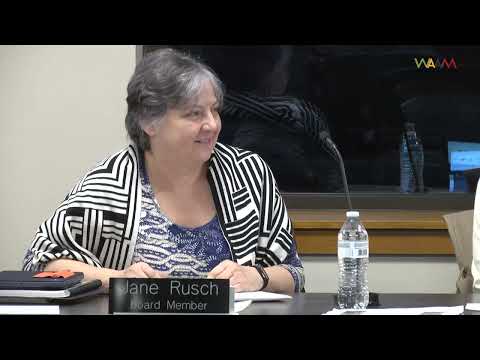
Board members debated the size and focus of the request and emphasized that the referendum is presented as nonrecurring and would be for five years. Multiple board members voiced support for the administration's recommendation, citing the need to protect student programming and address deferred maintenance. One board member urged transparency and stressed the district's recent fiscal restraint, noting prior steps such as a 19% reduction in the mill rate over time and past referendums that funded maintenance work.
The board made three consecutive motions related to the referendum question and approvals. First, members voted to modify the resolutions to reflect an $8,000,000 annual amount. The roll-call result on that motion was: Sarah Brock (Yes); John Kriescher (Yes); Pat McKee (Yes); Jennifer Paoli (Yes); Joanna Reyes (Yes); Jane Roche (Yes); Corey Sellers (No); Jim Boucher (No). The board then approved the resolution authorizing the district budget to exceed the revenue limit by $8,000,000 per year for five nonrecurring years (roll-call: Brock Yes; Kriescher Yes; McKee Yes; Paoli Yes; Reyes Yes; Roche Yes; Sellers No; Boucher Yes). Finally, the board approved the resolution providing for the referendum election on that question; the administration noted the statutory filing deadline to submit the referendum question was Jan. 21 and the referendum vote would be held April 1.
The administration cautioned that failure of a referendum or continued spending reductions could force cuts to staff, programs, extracurriculars and deferred maintenance, and said the district will continue consolidation and other efficiency efforts regardless of the referendum outcome. The board also approved several routine items that night, including the consent agenda, acceptance of the 2023–24 audit report and open‑enrollment space determinations. The board voted to enter a closed session to discuss Red Granite Charter School contract evaluations.
The board's action sends an $8 million-per-year, five-year, nonrecurring operating referendum to the April ballot; the district will follow statutory steps to finalize the question for the election.