Get Full Government Meeting Transcripts, Videos, & Alerts Forever!
Get email alerts on the Energy Policy topic
No spam. Unsubscribe anytime.
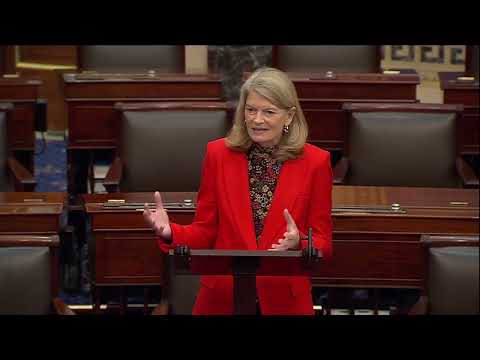
Senator from Alaska urges rejection of SJR 10, calls Alaska in 'energy emergency'
Summary
The senator from Alaska urged colleagues to oppose Senate Joint Resolution 10, which would terminate a presidentially declared energy emergency, saying remote communities face extreme energy costs, that Alaska may need to import LNG, and that federal permitting blocks access to critical minerals.
The senator from Alaska urged fellow senators to oppose Senate Joint Resolution 10, which would terminate the energy emergency declared by President Trump, arguing that Alaska is facing multiple energy crises that require continued federal attention and action.
He told the Senate that "we have residents in many communities that are spending up to half of their incomes on energy," and warned that, unless access to local resources improves, "we are actually talking about importing LNG from Canada" to meet winter needs for roughly 75% of Southcentral Alaska's population.
The senator framed the issue as both a local hardship and a national strategic concern: he said the Trans‑Alaska Pipeline is operating at about one‑quarter of its capacity and that the state holds known deposits of "about 50 critical minerals," which he described as essential to supply‑chain security. He cited the Ambler Mining District road project and a 1980 federal law that, he said, created a road corridor in exchange for park protections, and claimed subsequent federal decisions have blocked the project.
Why it matters: the senator argued that restricted access to domestic energy and minerals raises costs for isolated communities and increases U.S. dependence on foreign suppliers. He described concrete price effects in villages — including retail examples such as about $18 for a gallon of milk and roughly $50 for a box of laundry detergent — to illustrate how fuel and freight drive up basic living expenses.
The senator blamed a "broken federal permitting process" and partisan opposition in Congress for blocking projects that would expand production and transmission, and he praised recent executive actions by the Trump administration as steps toward "unleashing Alaska's energy and resource potential." He also said an "all‑of‑the‑above" energy strategy that includes renewables is part of his approach: "energy is good," he said, and development can strengthen national security while reducing purchases from countries with lower environmental and labor standards.
The Senate transcript records the senator's floor remarks opposing SJR 10 but does not record a subsequent vote or formal amendment related to the resolution during his speech.