Lifetime Citizen Portal Access — AI Briefings, Alerts & Unlimited Follows
NAVSEA tech‑transfer manager Paige George outlines how Navy lab innovations reach warfighters
Loading...
Summary
Paige George, tech transfer manager at the Naval Surface Warfare Center Panama City Division and FLC board member, describes how cooperative agreements and lab partnerships move dual‑use technologies from concept to fleet use, citing a diver heads‑up display as an example.
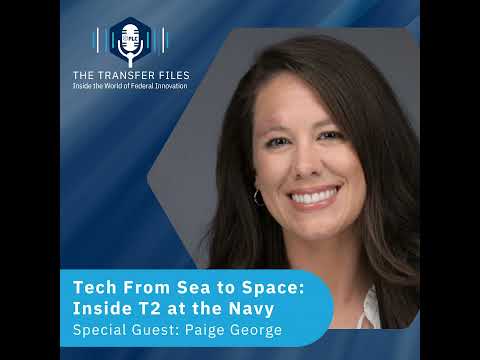
Paige George, tech transfer manager at the Naval Surface Warfare Center Panama City Division, said on The Transfer Files podcast that her role is to connect researchers with legal, security and program offices so federally developed technologies can reach the warfighter.
"You are involved in all of it," George said, describing a job that manages agreements and ensures work "follows all the law, the statute, the instructions" so scientists can focus on mission work. She emphasized that Department of Defense labs prioritize dual‑use capabilities that directly support military customers.
George offered a specific example of a successful transfer: a diver's augmented vision display inserted into a Kirby Morgan diving helmet that provides a see‑through heads‑up display. "Topside can send them text messages. They can do, like, a 3‑D overlay of what they're working on," she said, describing how the system helps divers perform tasks in low‑visibility, hazardous conditions.
She credited patent licenses and cooperative research and development agreements (CRADAs) for speeding the DAVID system from concept to deployment in fleet units, noting that such non‑FAR agreements can fast‑track technologies for operational use.
While the federal tech‑transfer mission can include commercialization, George said, the Department of Defense focus is distinct because "our customer in the DOD are warfighters." She added that bringing small, nontraditional companies into the government acquisition pipeline is a major challenge and a key part of tech‑transfer work.
George also described the practical benefit of cross‑laboratory collaboration through the Federal Laboratory Consortium for Technology Transfer (FLC). "When I come here to the FLC national meeting every year, the majority of the time I just spend talking to other people asking them, like, ‘Hey, here's a problem that I have. How would you do it at your lab?’" she said.
The episode includes background on George's path into tech transfer — from a high‑school Navy internship through a scholarship program to a mechanical engineering degree and more than a decade in diving and life‑support systems — and explains how hands‑on experience shaped her approach to translating technical work for operational use.
The interview closed with George urging continued use of CRADAs, patent licensing and cross‑agency best practices to accelerate the transition of federally developed technologies into practical use.