Get Full Government Meeting Transcripts, Videos, & Alerts Forever!
Get email alerts on the Underground Railroad topic
No spam. Unsubscribe anytime.
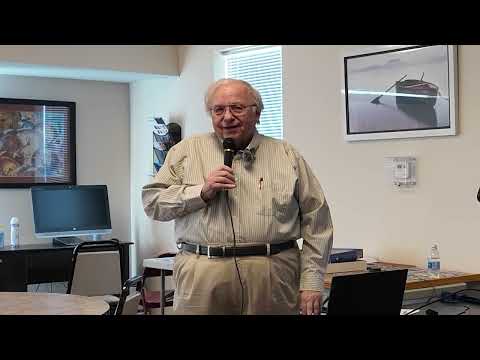
Roger Smalley details Medina County's role in the Underground Railroad
Summary
Roger Smalley, representing the Engine House Museum and Main Street Medina, presented documented research identifying 25 confirmed stations across Medina County and described local routes, stationmasters and hiding places used to shelter people escaping slavery during the 19th century.
Roger Smalley, a representative of the Engine House Museum and Main Street Medina, told an afternoon audience that researchers have confirmed 25 Underground Railroad stations in Medina County and described how local families concealed escaping enslaved people and moved them north toward Lake Erie and Canada. "We have 25 stations that were confirmed here in Medina County," Smalley said during the program, which assembled county research and historical sources.
Smalley framed the county's activity in wider context, noting Ohio's geographic importance as a conduit to Lake Erie and Canada. He reviewed the legal risks stationmasters faced after the Fugitive Slave Act of 1850, saying the law initially carried penalties of six months'imprisonment and a $1,000 fine (which he said would be roughly $41,000 in recent dollars), and described how enforcement chilled local assistance.
The presentation cataloged named stationmasters, routes and hiding places. Smalley recounted local examples including Halsey Hulbert's 1834 home with a concealed brick enclosure in the basement; a brick tunnel beneath the porch at Timothy Burr's Harrisville (Lodi) property where "at times there were 10 to 15 escapees hidden in the house"; and mill-based concealment at Gad Blakesley's Blakesley Mill, where water diversion could hide an access door. On the county village level, Smalley described the Blake House on Washington Street and the Thomas/Miller house, where attics, chimney alcoves, bookcase doors and a trapdoor under a braided rug provided concealed spaces.
Smalley also recounted visits by nationally prominent abolitionists: William Lloyd Garrison and Frederick Douglass spoke in Medina County during the 1840s and later decades, drawing large crowds. He credited the discovery of some local evidence to researcher Dale Chase and to manuscript holdings at the Oberlin Public Library.
On wartime and postwar developments, Smalley said the Underground Railroad's work largely ended with the Emancipation Proclamation (1863) and that Congress repealed the Fugitive Slave Act in June 1864. He cited a widely reported Wellington jail break involving 37 men (20 arrests followed) and offered a set of audience-facing estimates he described as research-based: "Estimates vary, but it is believed that 100,000 slaves escaped into Canada; 40,000 are believed to have traveled through Ohio; and of that number, at least 4,000 came through Medina County," Smalley said. He attributed research credits throughout to county historical societies and to Judge Dale Chase's earlier work.
The program emphasized the hardship and risk undertaken by both escapees and local helpers and closed with Smalley's call to remember the courage of those who sought freedom and those who assisted them. No formal votes or municipal actions resulted from the presentation; Smalley invited attendees to consult the program materials and local historical societies for further documentation.