Lifetime Citizen Portal Access — AI Briefings, Alerts & Unlimited Follows
Council moves Hopewell PUD rezoning to second reading after hours of questions and public comment
Loading...
Summary
After presentations from the mayor, developer and staff and more than an hour of public testimony, the Bloomington Common Council moved the Hopewell Planned Unit Development ordinance to second reading on March 25, citing outstanding questions about affordability tools, delegated approvals and design details. The motion passed 6-3.
Mayor Lucy Thompson and a team including Ali of Flintlock Labs presented the Hopewell PUD as a testbed for nearly 100 pre‑designed, smaller, lower‑cost homeownership units aimed at workforce buyers. Thompson told council the project "provides the most affordable new homeownership options in the county," and warned that delays could raise prices by 5–10% if the project missed the coming building season.
Ali, a member of the Flintlock design team, said the PUD combines smaller lots, preapproved house plans, custom street sections and an approach to cluster accessible units; he described roughly 98 homes in a mix of single‑family, duplex and small multifamily buildings and said the PUD includes "pre‑permitted plans that streamline permitting, reduce costs, and get people in homes faster." Eric Grulich, development services manager, explained that the primary plat will still go to the planning commission and that the commission had agreed to delegate final plan approval to staff at the petitioner’s request.
Council members pressed on the mechanics of long‑term affordability and public review. Councilmember Piedmont Smith asked why final plan approval was being delegated to staff rather than returning to the planning commission and when additional public input would be available. Grulich said the planning commission will hear the primary plat and that final plan delegation reflected a finding that the remaining issues did not require another public hearing. Piedmont Smith and others also sought clarity on whether affordability guarantees would rely on deed restrictions, shared‑equity mechanisms, silent‑second mortgages, or a right‑of‑first‑offer; the RDC representative said the PUD language “bakes in” affordability percentages but that the exact mechanisms were still under discussion.
Public comment drew more than 30 speakers in a roughly 45‑minute block. Nonprofit housing groups, local employers and the builders association urged council to move forward, citing workforce housing shortages. Several neighborhood residents and preservation advocates praised elements of the design but warned about parking, HOA costs and transportation lane designs; one nearby homeowner urged council to preserve street character. Speakers from local housing authorities and community foundations emphasized that the PUD could be a replicable model for missing‑middle homeownership.
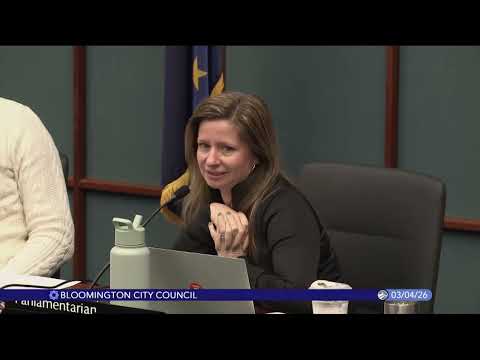
After deliberation the council voted to move Ordinance 2026‑06 to second reading on the March 25 regular session so members could draft and consider reasonable conditions. Councilmember Stossberg made the motion to move the ordinance to second reading; the motion passed on roll call 6‑3. The chair announced the item will be discussed again March 25. No final rezoning vote or final plan approval occurred tonight.
Looking ahead, staff said a working group of city staff, council members and plan commissioners will draft UDO amendments tied to housing attainability and that public meetings and plan commission review are planned in the summer.