Lifetime Citizen Portal Access — AI Briefings, Alerts & Unlimited Follows
Census Academy webinar walks users through health data tools, ACS and microdata workflows
Loading...
Summary
U.S. Census Bureau trainers demonstrated how to use data.census.gov and the MDAT microdata tool to find health-related measures (disability, health insurance, poverty) at ZCTA, PUMA and metropolitan levels, showing Detroit and New Orleans examples and answering questions about upcoming ACS releases.
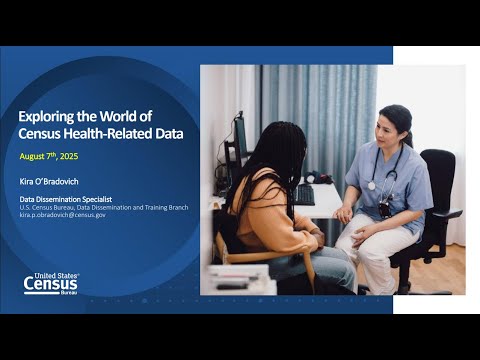
The U.S. Census Bureau on a Census Academy webinar demonstrated how researchers and health partners can find and apply health-related data using data.census.gov and the Microdata Access Tool (MDAT).
Kira Obradovich, a data dissemination specialist in the Census Bureau's Data Dissemination and Training Branch, led the session and emphasized two principal tools: data.census.gov for published tables and MDAT for public‑use microdata. "I'm going to cover two primary tools, data.census.gov, and show you how you can filter," Obradovich said, describing demonstrations that traced searches from geographic filters to table downloads.
Why it matters: Census data power planning and funding decisions. Obradovich noted the American Community Survey (ACS) surveys roughly 3.5 million addresses annually and that Census data underpin distribution formulas for federal funding (about $2.8 trillion in allocations). For analysts weighing small‑area estimates, she reviewed when to use ACS 1‑year versus 5‑year estimates and highlighted margins of error and downloadable citations available in the tables.
On data.census.gov, Obradovich showed how to use advanced search to restrict by geography (for example, selecting ZIP Code Tabulation Areas for Detroit), by topic (health, income/poverty, disability) and by survey year. She walked through a comparison of ACS 5‑year estimates (2013 vs. 2023) to demonstrate changes in poverty rates across selected ZCTAs and pointed out table features such as totals, percent estimates and margins of error.
Obradovich explained the difference between postal ZIP codes and Census ZCTAs, noting ZCTAs are Census-built approximations updated after each decennial count and that crosswalk files are provided for users who need conversions.
MDAT demo and microdata uses: Obradovich introduced the Microdata Access Tool for creating custom cross‑tabulations using PUMAs (public use microdata areas). Using New Orleans as an example, she filtered MDAT for respondents who reported a vision difficulty and then selected detailed household language variables. The demonstration produced counts the presenter used to illustrate outreach planning (for example, roughly 264 French‑speaking people in New Orleans with a reported vision difficulty and about 1,171 Spanish speakers in the same population). "That way I know what I might be needing to make for my marketing tools or my programming," she said.
Practical examples: Obradovich cited county health departments using ACS data to map service areas for community health workers, epidemiology departments using survey data to design outreach for single mothers, and tech companies integrating Census data into clinical decision tools to inform care planning at the bedside.
Q&A and next steps: During questions, a participant asked whether there will be a separate prerelease webinar for the ACS 5‑year estimates; Obradovich advised participants to monitor the ACS team site for updates and noted the typical release schedule (1‑year estimates in September, 5‑year estimates in October). Asked about mapping food‑access issues ("food deserts") for North Carolina, Obradovich recommended using the Household Pulse Survey (now Household Trends/Outlook releases) at the state or available metropolitan levels and selecting relevant food‑scarcity or related indicators where available.
Obradovich closed by reminding attendees that slides and the recording will be posted to the Census Academy site within 30 business days and encouraged organizations to request tailored trainings from the Data Dissemination and Training Branch (census.askdata@census.gov).
The webinar concluded with a request that attendees complete the post‑webinar evaluation for professional development confirmation. The Census Academy prerelease webinar for upcoming ACS releases was noted in the chat as scheduled for September 4 (registration link available on the Census Academy site).