Lifetime Citizen Portal Access — AI Briefings, Alerts & Unlimited Follows
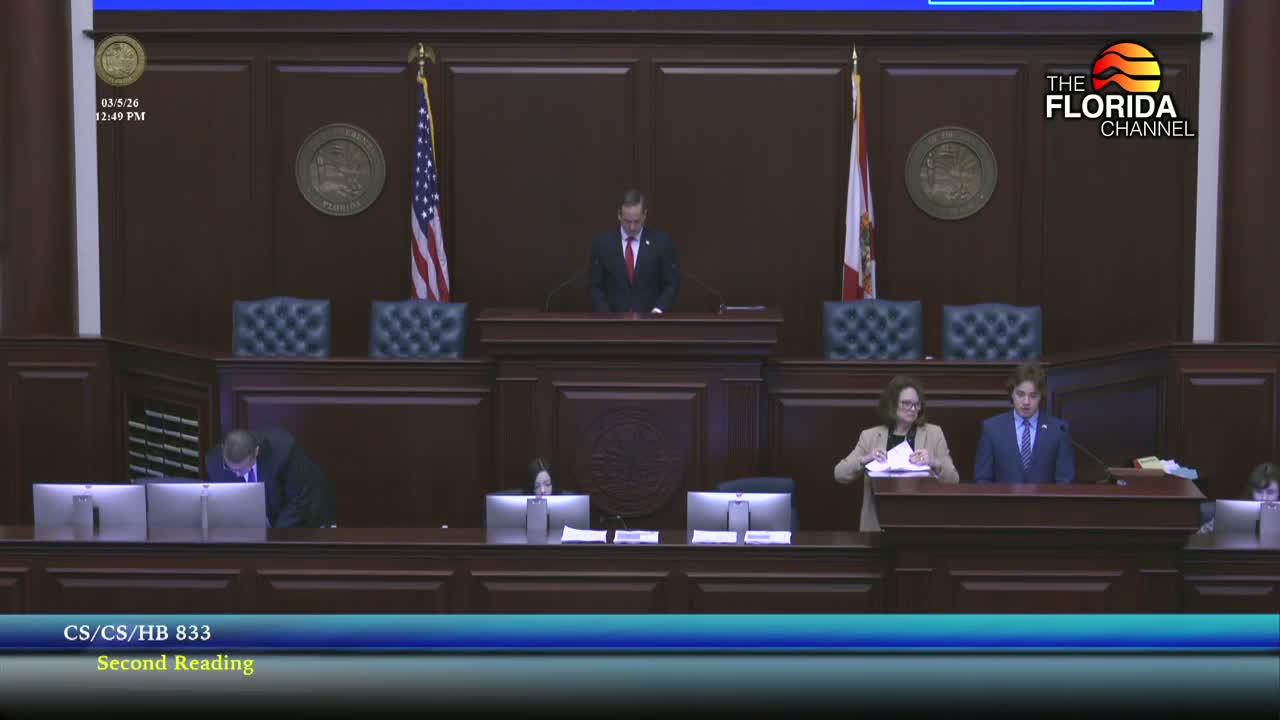
House adopts bill easing zoning for small private schools after amendment to protect safety
Loading...
Summary
CS for CS for HB 833 allows private schools enrolling 150 or fewer students to be a permitted use in commercial and mixed‑use zoning, with an amendment preserving reasonable, attributable traffic and pedestrian safety mitigation; passed 85‑22.
Representative Cassell presented CS for CS for HB 833 to ease local land‑use barriers that can prevent small private schools (commonly microschools and specialized schools for children with unique needs) from occupying existing commercial spaces. The sponsor said the aim is to allow these small schools to use underutilized retail or mixed‑use space while maintaining fire, life‑safety, and pedestrian‑traffic protections.
The House adopted an amendment crafted in consultation with the League of Cities and other stakeholders clarifying that local governments may require mitigation measures related to vehicular traffic and pedestrian safety so long as those measures are reasonable, directly attributable to the school's operations, and no greater than what is required of other permitted uses in the same zoning district. The amendment also provides schools the ability to submit traffic studies and a path for injunctive relief if a locality does not apply the statute as written.
Opponents expressed concern about local aesthetics, evacuation zones and municipal sign and landscaping ordinances; the sponsor said existing local ordinances (for example signage or evacuation planning) would remain applicable and the bill targets use‑category permitting, not safety standards. Representative Bartleman said his city’s evacuation and local codes need careful treatment; sponsor Cassell said she is open to additional conversations but that the League of Cities had waived in support of the amendment.
Following debate and adoption of the amendment, the House passed the bill on final passage, 85 yays and 22 nays. Sponsors said the bill will expand access to small‑scale educational options—particularly for families seeking specialized programs—but acknowledged the importance of local safety requirements.