Get AI Briefings, Transcripts & Alerts on Local & National Government Meetings — Forever.
House Homeland Security subcommittee hears competing views on DOT rule restricting non‑domiciled CDLs
Loading...
Summary
At a House Homeland Security subcommittee hearing, state law‑enforcement officials described arrests and safety lapses tied to non‑domiciled commercial driver's licenses while a Public Citizen attorney said the Trump administration’s DOT rule would remove thousands of legally authorized drivers and worsen workforce shortages.
The House Homeland Security Subcommittee on Oversight, Investigations, and Accountability on Feb. 13, 2026, held a hearing on the Department of Transportation and Federal Motor Carrier Safety Administration (FMCSA) rule restricting issuance of non‑domiciled commercial driver's licenses (CDLs).
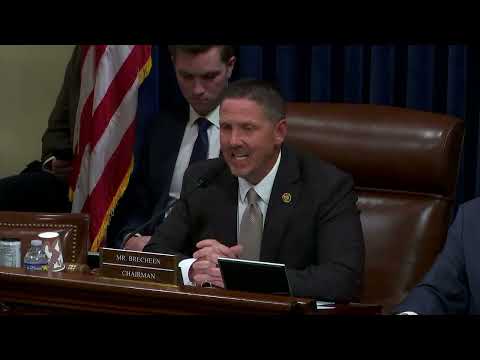
Chairman Burkin opened the hearing by arguing the topic falls within the committee’s jurisdiction because DHS coordinates on immigration verification and law‑enforcement efforts with DOT and ICE. He cited DOT and FMCSA audits he said revealed state failures — including a California figure he described as 17,000 allegedly improper non‑domiciled CDLs and a claim that over 50% of New York’s non‑domiciled CDLs were in violation of federal standards — and linked those findings to fatal crashes in 2025 he said involved noncitizen drivers.
Tim Tipton, commissioner of the Oklahoma Department of Public Safety, told the panel that his agency’s use of ICE credentialing and joint emphasis operations uncovered a “shocking amount” of transnational freight driven by people his troopers subsequently arrested for immigration violations. Tipton said OHP had taken “over 450 CMV operators into custody” since 2025 and described roadside encounters in which a driver presented “a Real ID compliant CDL with the first name listed as ‘no name given.’” He said employment authorization documents (EADs) alone are “an inadequate qualifier” for someone to operate in the critical‑infrastructure trucking sector and urged cracking down on CDL mills and training centers that he said certify unqualified people.
Sheriff Richard Del Toro Jr. of St. Lucie County, Florida, described an Aug. 12, 2025, crash on the Florida Turnpike that he said killed three people. He told the subcommittee the driver had entered the U.S. illegally and obtained a CDL after failing the test multiple times in another state. “For the families of those victims, this is not a policy debate. It’s a permanent loss,” Del Toro said, and urged stronger, consistent verification standards across states.
Wendy Liu, an attorney with Public Citizen Litigation Group representing petitioners challenging the DOT rule, said highway safety is critical but that the FMCSA’s restrictions would exclude documented immigrants who she said have the same training and testing requirements as U.S. citizens. Liu noted the administration had identified 17 crashes in 2025 it said likely involved a documented immigrant, and said that figure is small compared with roughly 4,000 annual fatal crashes: “17 is less than 1 percent of that number,” she said. Liu warned the rule could force “200,000 experienced drivers out of the market,” worsening a reported industry shortage and disrupting services such as school buses, mass transit and snowplow operations.
Members pressed witnesses on enforcement and coordination. Representative Van Epps and others emphasized that a CDL issued in one state is valid nationwide and warned inconsistencies — for example, states that do not verify immigration status in person — create risks for other states. Tipton and Del Toro called for stronger interagency checks and for states to work with federal partners and ICE credentialing under task‑force agreements. Several members cited the FMCSA final rule (noted in testimony as issued Feb. 13, 2026) and asked whether litigation already filed against the rule should affect congressional response.
The hearing included personal testimony from a family introduced by Representative Fong; Fong said the family’s daughter, Delilah Coleman, suffered grave injuries in a crash he attributed to an illegally present driver. Fong said he was working on model legislation to require states to limit certain trucking licenses and to condition federal transportation funding on compliance.
No formal votes were taken. Chairman Burkin closed by asking witnesses to submit written responses to members’ follow‑up questions; the chair kept the hearing record open for 10 days and adjourned the subcommittee without a vote.
Why it matters: The hearing framed the FMCSA rule as both a public‑safety and workforce issue. State law enforcement and local officials testified that improperly issued CDLs pose safety and fraud risks on highways; consumer‑advocacy counsel argued excluding documented immigrants would strain an already tight driver labor market and disrupt essential services. The dispute centers on whether stricter eligibility rules will improve safety or harm supply‑chain resilience and public services.
What to watch next: Members requested written responses; litigation challenging the FMCSA rule is pending, and several witnesses urged state‑level legislative or administrative steps to tighten vetting and enforcement.