Get Full Government Meeting Transcripts, Videos, & Alerts Forever!
Get email alerts on the Generator Setbacks topic
No spam. Unsubscribe anytime.
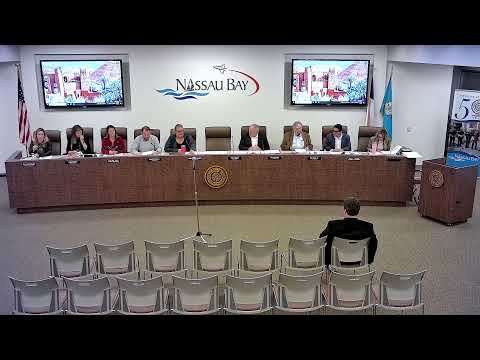
Nassau Bay council hears resident safety concerns as it advances first reading of generator setback ordinance
Summary
A resident urged the council to increase residential standby-generator setbacks from 3 feet to 5 feet citing carbon‑monoxide, heat and noise risks; council held a first reading of an ordinance to tighten rules and deferred final action to a second reading next month.
The Nassau Bay City Council on Jan. 13 heard a public plea to increase minimum setbacks for residential standby generators and completed a first reading of an ordinance that would raise setback rules for new installations.
At a public hearing, resident Becky displayed a 36‑inch measuring stick and urged the council to move the city’s generator setback from 3 feet (36 inches) to at least 5 feet, saying the current rule allows exhaust, heat and noise to affect neighboring yards and homes. "Most of our houses are not even 23 feet apart," Becky said, noting manufacturers list decibel ratings measured at 23 feet and expressing concern about carbon monoxide and heat reaching adjacent properties.
The council’s proposed ordinance, filed as Ordinance 2025‑01‑13‑1, would amend the comprehensive zoning code to add specific setback requirements for household generators, establish grandfathering rules for existing installations, create elevation provisions and set penalties. The mayor said increasing the setback for narrowly spaced homes is a "simple item" that would address many resident complaints by preventing generators from being placed in tight corridors between houses.
City staff cautioned that the council cannot impose a moratorium that would block permits already applied for. "There's a prohibition against it," a staff member said, noting Texas’ "vesting" rules let applicants proceed under earlier rules once they trigger a permit application.
Councilmembers discussed options for waivers through the Board of Adjustment for homeowners with unique constraints and acknowledged medical‑necessity exceptions could be handled through the appeals process. The ordinance was held over for a second reading next month; no final vote on the ordinance was taken during the Jan. 13 meeting.
Why it matters: The change would affect homeowners seeking new generator permits and could reduce nuisance and safety complaints in compact residential areas. It also raises questions about how existing permits and already‑installed units are treated under state vesting rules.
What’s next: The council scheduled a second reading; staff will prepare ordinance language, waiver procedures, and implementation guidance for the follow‑up meeting.