Get Full Government Meeting Transcripts, Videos, & Alerts Forever!
Get email alerts on the Energy Prices topic
No spam. Unsubscribe anytime.
Lawmaker says clean energy is cheapest, warns Trump-era policies will raise electricity costs
Summary
On the Senate floor, a lawmaker argued that clean energy is now the least expensive source of electricity and warned that recent federal actions are creating shortages that could raise consumer bills; a questioner cited an ISO New England example showing a 9¢ vs. 18¢ pricing gap and called blocking clean projects a "scam."
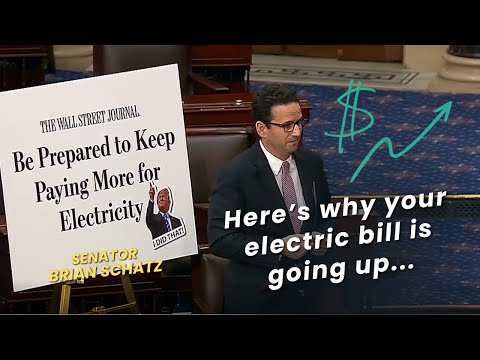
A lawmaker on the Senate floor said clean energy is now the cheapest way to generate electricity and warned that recent federal policy choices are creating shortages that will raise household electric bills.
"Clean is cheap, and cheap is clean," the lawmaker said in floor remarks, adding that the country needs more interstate transmission and faster permitting so nearly completed projects can be connected to the grid. The speaker said those steps are needed both to address climate concerns and to reduce costs for consumers, noting that "1 in 4 Americans struggle to pay their electricity bills."
In a follow-up question, another participant described how the ISO New England market sets minute-by-minute prices and offered a concrete example: a proposed wind project he said would deliver power at about 9¢ per kilowatt-hour into a market where the prevailing rate is about 18¢. "If President Trump and his minions at Interior and EPW, and Energy can stop that plant, they're making Rhode Islanders, New Englanders, buy 18¢ power instead of 9¢ power," the questioner said, calling such moves "a scam" that funnels money to fossil-fuel interests.
The lawmaker responded by describing Hawaii's separate, islanded grids and the state's reliance on low‑sulfur fuel oil for generation, which he characterized as both expensive and dirty. He said Hawaii has strong onshore wind and other renewable resources in places such as Maui and parts of Hawaii Island and that modern grid management tools allow higher renewable penetration than was thought possible decades ago. He also warned that electricity bills in Hawaii could rise because of a policy referenced in the remarks as "OBBA," an acronym he did not explain on the floor.
Both speakers argued the policy debate is no longer abstract. The lawmaker said long lead times for dispatchable options such as new nuclear ("at least an 8 to 12 year time frame") mean that in the near term policymakers need to prioritize projects that can be built and connected quickly. He urged colleagues to abandon old talking points and to support permitting reforms and transmission investments that would increase the supply of electrons on the grid and, he said, lower costs for consumers.
There was no formal vote or other procedural action recorded in the exchange; the remarks were a floor-level statement and a question-and-answer exchange about grid dynamics and the economic effects of blocking low-cost renewable projects.