Lifetime Citizen Portal Access — AI Briefings, Alerts & Unlimited Follows
Senator urges directing federal health subsidies into patient accounts, warns $6,000 deductibles leave families effectively uninsured
Loading...
Summary
On the Senate floor, a lawmaker argued for routing federal subsidy dollars into patient-controlled health savings accounts rather than insurer premium subsidies, citing $6,000 deductibles that he said make insurance unusable for many and raising concerns about abortion funding under Democrats' plan.
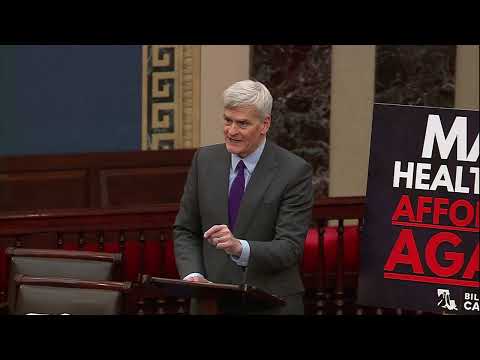
A U.S. senator on the Senate floor urged lawmakers to send federal health subsidy dollars directly to patients instead of routing them to insurance companies, saying the current structure leaves many families unable to afford care.
Speaking at length, the lawmaker said Democrats are proposing to "send $26,000,000,000 to insurance companies" to subsidize silver-level plans that he described as carrying "a $6,000 deductible." He asked rhetorically, "Do you have $6,000 in your bank account to spend on health care before the insurance actually kicks in?" and said no one answered affirmatively when he posed the question.
The senator characterized the alternative he supports as a direct-payment approach that would place money in patient-controlled health savings accounts. Using an illustrative example he described as from his state, he said the plan would deposit $1,000 into accounts for people up to age 49 and $1,500 for those over 49, saying a family of four in his example would receive "$5,000 into their health savings account" to pay for doctor visits and medicines.
"We want power to the patient, not profit to the insurance company," he said, arguing that direct payments would let patients shop for lower-priced care and reduce overall costs. He contrasted that with what he described as insurers taking "20% for profit and overhead" under the alternative of premium subsidies.
The senator also repeated a claim about program integrity he attributed to Senator Crapo, saying the insurer-subsidy approach has led to "widespread fraud and unauthorized enrollment," and argued that health savings accounts administered by banks would require identity checks and reduce fraud.
He raised a second line of objection tied to reproductive health: relaying an argument he attributed to Minority Leader Schumer, the senator said opponents worry the Republican approach "will not allow abortions" and that Democrats are resisting the proposal because of the Hyde Amendment. He defined the Hyde Amendment in his remarks as "the federal government... not to spend federal dollars to pay for abortion." He also said that when the Affordable Care Act (which he referred to as "Obamacare") passed, "these plans are not supposed to pay for abortion" and referenced a provision he cited aloud as "Section 13 o 3." The transcript does not include a response from other senators on those points.
The floor remarks contained several numerical claims and an illustrative example that were stated by the speaker during debate; some of the numeric comparisons were given in different ways in the same speech (for example, the senator described silver-plan costs as both "$6,000 more a year" and "almost $3,000" at different points). Those figures are presented here as they were stated in the remarks.
The senator concluded by urging a bipartisan "American plan" that he said would provide "real insurance" rather than policies that leave people effectively uninsured because of high deductibles. He then yielded the floor. The transcript includes no formal motion or vote associated with these remarks.