Lifetime Citizen Portal Access — AI Briefings, Alerts & Unlimited Follows
Ginnie Mae trains multifamily issuers on RFS reporting, eNote and key deadlines
Loading...
Summary
Ginnie Mae hosted a multifamily issuer training emphasizing that issuers must report 100% of monthly pool and loan data to RFS by 7 p.m. Eastern on the second business day, clear critical exceptions by the fourth business day, and maintain oversight of subservicers; presenters walked through eNotification, record types and common exceptions.
Christy Christiansen, a Ginnie Mae issuer support analyst, led a multifamily issuer training that reviewed monthly investor-reporting timelines, the eNotification (eNote) system and the four RFS record types issuers must submit.
The session stressed compliance deadlines: issuers must submit 100% of pool and loan data to the Reporting and File Submission (RFS) system by 7 p.m. Eastern on the second business day of the reporting cycle, and clear critical exceptions by 7 p.m. Eastern on the fourth business day. Presenters warned that missing the second-business-day deadline has in the past exposed issuers to potential monetary penalties and operational follow-up from Ginnie Mae staff.
Why it matters: RFS reporting underpins payment flows and guarantee administration for Ginnie Mae mortgage-backed securities. Late or incomplete reporting can produce exceptions that affect ACH debits for guarantee fees and P&I remittances and may result in enforcement actions.
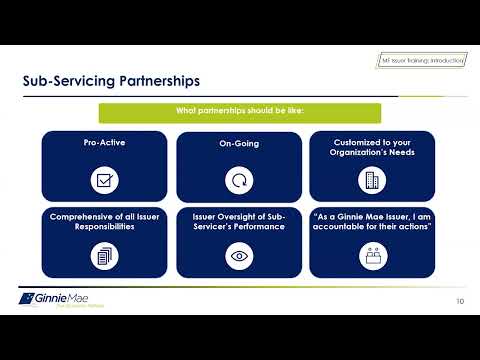
Presenters outlined issuer responsibilities and subservicer oversight. Christiansen said an issuer’s compliance program should include staff knowledgeable about Ginnie Mae rules, a QC mortgage plan, the ability to service pools within the LBS guidelines and guarantee agreement, maintenance of P&I and escrow accounts, and processes to ensure funds are available for ACH debits. She emphasized that ‘‘issuers remain accountable for their subservicers’ reporting’’ and should maintain frequent communication and monthly oversight of subservicer performance.
Melanie, a member of the Ginnie Mae issuer support team, led a detailed walkthrough of eNotification (eNote), the portal where Ginnie Mae posts daily notices and files. She noted that some notices are overwritten as the month progresses (for example, the third-business-day precollection notice is replaced by the sixth-business-day posting), so issuers should pull and save important notices promptly. eNote posts include functional acknowledgments (accept/reject flags), PA exception feedback files, commitment authority and the annual MWX issuer detail report (available in eNote for 180 days).
On file handling, presenters demonstrated that eNote attachments are downloadable as CSV and can be saved as Excel for easier sorting and exception management. They urged issuers to designate a group email address for eNote because only one email address is permitted per issuer number.
Christiansen and Melanie reviewed the four RFS record types in detail. Pool (P) records report cumulative pool data and are required monthly (one P record per active pool). Loan (L) records report individual loan status and liquidations (one L record per loan). Sensitive (S) records capture static origination data used only for corrections. Various records contain origination fields that change only when HUD Form 11706 data is updated; changes to controlled fields on various records may be suspended and require a return report to the Ginnie Mae address provided for various-record corrections.
They called out fields that commonly generate exceptions — for example, pool FIC must reconcile to cumulative active loan FIC, and on loan records the case number, first payment date and maturity date frequently produce errors — and recommended regular reconciliation using the RFS summary screen and exception tabs. Presenters suggested issuer teams split exception clearing responsibilities by severity or rotate assignments so staff become familiar with resolving alerts.
Practical resources and contact points cited during the training included the Ginnie Mae MBS Guide (appendix 6-19 for record and field layouts), APMs and the investor reporting manual, with notices and training recordings available on the agency website. Presenters gave the Ginnie Mae hotline number for assistance and referenced an email address used for various-record confirmations (as described in the training materials).
The session closed with a knowledge check and an invitation to submit questions via chat or by unmuting. Presenters reminded attendees that a follow-up session would cover RFS exceptions feedback and reporting workflow in greater depth.