Get Full Government Meeting Transcripts, Videos, & Alerts Forever!
Get email alerts on the Rezoning topic
No spam. Unsubscribe anytime.
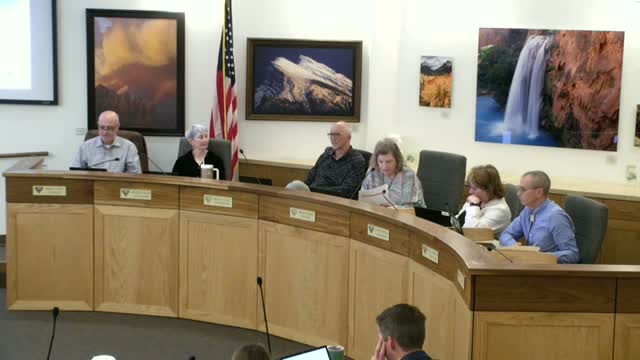
Sedona council unanimously denies RM3 rezoning for Tranquil/Rigby parcels after hours of testimony
Summary
After lengthy staff briefings, applicant presentations and more than an hour of public comment, the Sedona City Council voted unanimously to deny a request to rezone about 9.5 acres near the Safeway center from single‑family RMH to high‑density RM3 (case PZ24‑00018), citing traffic, neighborhood compatibility and unanswered mitigation questions.
The Sedona City Council unanimously voted to deny a requested zoning change for two adjacent properties at 50 Tranquil Avenue and 80 Rigby Road (case PZ24‑00018), rejecting a proposal to reclassify roughly 9.5 acres from RMH (single family and manufactured homes, up to four units per acre) to RM3 (high‑density multifamily, up to 20 units per acre).
Community Development staff opened the public hearing with a timeline of the application, noting the 180‑day statutory review deadline and the Planning & Zoning Commission’s 6–1 recommendation to deny. Staff told council the original submittal lacked sufficient commitments on housing diversity, affordability and circulation; the applicant submitted updated commitments in November but staff said there was not enough time to complete a full evaluation before the meeting.
The property owners’ team — represented by Luke Sefton of Sefton Engineering and attorney Darius Mammoudi — presented a series of voluntary commitments they offered to include in a future development agreement. Those included restrictions on short‑term rentals and an affordability package they described as “up to 30%” of future units restricted for workforce or lower AMI tiers (15% at 80–150% AMI, 10% at 60–80% AMI, and 5% below 60% AMI) for 30 years from the first certificate of occupancy, plus proposed shared‑use pathway easements and developer‑funded traffic mitigation and stormwater improvements.
Neighbors and community members were sharply divided. Dozens of speakers addressed council during the public hearing: supporters argued the rezoning aligns with Sedona’s community plan and is a rare opportunity to supply workforce housing; opponents warned that RM3 density risks dramatic traffic increases on narrow local streets, adverse impacts on neighborhood character and uncertain environmental and drainage effects. Multiple residents stressed that no developer or detailed site plan has been presented and urged council to require a project‑level proposal before changing zoning.
Council members acknowledged the need for more housing but repeatedly cited the absence of a binding, detailed development plan and lingering questions about traffic, private road impacts and infrastructure as decisive. Several councilors said the Planning & Zoning Commission and staff had raised legitimate concerns and that approving an RM3 designation without a clear plan would forfeit council leverage — especially given recent state legislative changes that limit public hearings at the development‑review stage.
Councilor Derek moved to deny the rezoning application, citing lack of compliance with the Land Development Code and inconsistency with the Community Plan and other adopted policies; council adopted the motion with friendly amendments that specifically referenced a lack of traffic mitigation and insufficient neighborhood protections. The motion carried unanimously.
The denial means the property will remain RMH unless the owners return with a revised application, a formal development plan, or other changes that address the city’s findings. Staff said the applicants may reapply and that elements of the owners’ proposed commitments could be revisited if a future project is brought forward.
Next steps: the council’s action concluded the public‑hearing phase on this rezoning request. Staff and the property owners may engage on alternative proposals; any future rezoning or development agreement would require additional notice and review.