Get AI Briefings, Transcripts & Alerts on Local & National Government Meetings — Forever.
Scott County considers siting rules and short moratorium as officials weigh data-center impacts
Loading...
Summary
Planning staff proposed a framework to add data centers as conditional uses in I-2 zones with performance standards (noise, lighting, utility protections) and recommended environmental reviews and decommissioning plans; the court asked staff to draft moratorium language to allow ordinance development.
Scott County Fiscal Court discussed a proposed framework for a data-center siting ordinance and signaled support for drafting a temporary moratorium on applications while the county develops detailed zoning language.
Holden, presenting on behalf of planning and zoning, told the court the county's current code effectively does not permit data centers without amendment and recommended three primary steps: define "data center," allow the use conditionally in the I-2 heavy industrial zone, and adopt specific performance standards and development-plan requirements.
"If a data center would want to come to Scott County, we've got to look at how we would manage it from a planning and zoning perspective," Holden said, adding that conditional-use review and board-of-adjustment oversight would let the county place reasonable conditions on development.
Holden urged the court to consider performance standards addressing noise, lighting and other nuisance effects; noted the need to confirm infrastructure capacity for water, electric and roads; and suggested requirements for a percentage of on-site renewable energy or other measures to limit pressure on community utility rates. He also recommended requiring environmental-impact studies for large-scale projects.
Court members raised several concerns: limited I-2 acreage in the county and the need to use rezoning on a case-by-case basis if a project is proposed; potential for speculative land purchases by investors without development follow-through; and the risk that a data center's water and electric demands could push up rates for local customers.
One member noted a large, proposed project in neighboring Mason County and cautioned about community impacts, while others suggested the county borrow language used for solar-farm decommissioning plans to force cleanup and recapture obligations if a developer abandons a site.
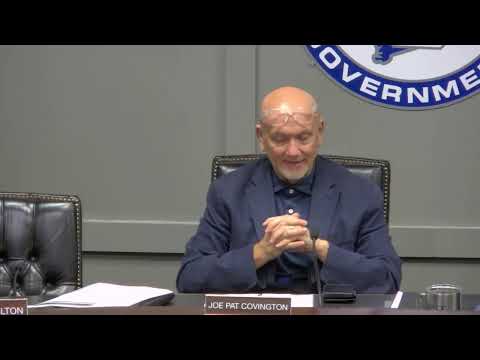
Judge Covington asked whether the court should consider a moratorium to buy time for ordinance development. Members agreed that a moratorium draft would allow staff and the court time to design appropriate siting rules and safeguards before any application could proceed.
No application was before the court at the time of the discussion, and the court did not enact a moratorium in the meeting; it directed staff to draft moratorium language and to continue developing siting-ordinance provisions for future consideration.