Get Full Government Meeting Transcripts, Videos, & Alerts Forever!
Get email alerts on the Economy Employment Forecast topic
No spam. Unsubscribe anytime.
Alaska forecast: Department of Labor projects 3,000 jobs in 2026 amid decade‑long working‑age decline, economist says
Summary
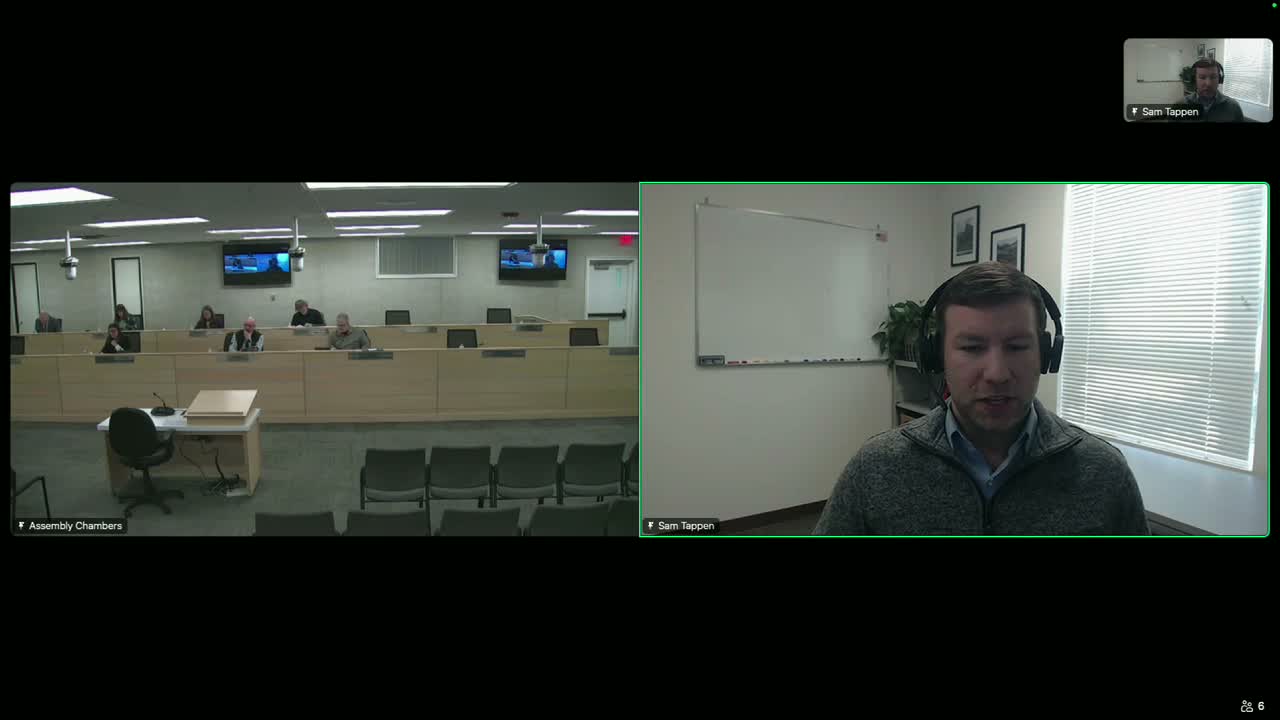
Sam Tappan, an economist with the Alaska Department of Labor, told the Kenai Peninsula Borough finance committee that Alaska is forecast to add about 3,000 jobs (0.9%) in 2026 but faces a shrinking working‑age population (down about 34,000 since 2013) and 12 straight years of negative net migration.
Sam Tappan, an economist with the Alaska Department of Labor and Workforce Development, told the Kenai Peninsula Borough finance committee that Alaska is forecast to add about 3,000 jobs in 2026 — roughly 0.9% growth — even as the state grapples with longer‑term demographic challenges.
Tappan opened his presentation by comparing U.S. and Alaska employment trends, saying the United States fully recovered its COVID losses in 2022 while Alaska did not reach full recovery until 2024. "We reached our peak employment all the way back in 2015 at about 339,000 jobs," he said, and preliminary 2025 data still fall short of that peak.
He cited the 2020 COVID drop as a major shock — "statewide, Alaska lost 27,600 jobs, which was equal to 8.4% of all employment" — and showed how recoveries have varied by industry. Leisure and hospitality and trade/transportation/utilities, which are closely tied to the visitor industry, sustained the largest 2020 losses, while construction, transportation/warehousing/utilities and healthcare have driven much of the recovery.
Locally, Tappan said the Kenai Peninsula Borough has "fully recovered and then some." He reported the borough lost about 1,190 jobs in 2020 (≈5.9%) but is now roughly 1,700 jobs above 2019 levels, with manufacturing (food and transportation equipment) and retail (gas stations, sporting goods) showing notable gains.
Looking at 2025 and the near term, Tappan said preliminary data show slower growth than analysts expected. "We projected a growth rate of 1.6%, but it ended up being about 1.2%," he said, attributing part of the shortfall to changes in federal funding flows, trade policy disruptions and restrictions on migrant labor.
For 2026 he forecast modest but positive growth: about 3,000 new jobs statewide. "The majority of this growth we expect to see in the oil and gas industry," he said, adding that construction is expected to add about 700 jobs and healthcare about 1,100 jobs. He warned some sectors — leisure and hospitality, federal and local government employment — may lose jobs in 2026.
Tappan placed those employment trends in a broader demographic context: Alaska has lost roughly 34,000 working‑age adults since 2013, driven by aging (higher retirements among baby boomers) and persistent negative net migration. "For 12 straight years now, Alaska has had negative net migration," he said, adding that the state is seeing fewer in‑migrants rather than an extraordinary exodus of residents.
He also described a rise in nonresident hiring: the nonresident worker rate was 22.5% in 2023, and early 2024 indicators suggested it may be higher. On housing, Tappan summarized the Alaska Housing Affordability Index (produced with Alaska Housing Finance Corporation): affordability was lowest in 2020 (about 1.1 household earners needed) and reached recent historic unaffordability in 2023–24 near about 1.66, with Kenai tracking close to the statewide average.
During Q&A, committee members pressed Tappan on whether the department conducts formal exit‑interview research into out‑migration and whether a Kenai‑specific living‑wage metric exists. Tappan said, "Formally, no — we don't track any of that," and that while the department tracks wages and consumer prices, it does not maintain a localized living‑wage series for Kenai Peninsula Borough.
The presentation concluded with Tappan directing listeners to the Alaska Economic Trends magazine for deeper analysis; the committee thanked him and moved to the next agenda items.