Lifetime Citizen Portal Access — AI Briefings, Alerts & Unlimited Follows
Senator questions agency official on FCC authority to regulate political satire
Loading...
Summary
During a Senate exchange, a senator pressed an agency official on whether the Federal Communications Commission can regulate political satire under the public interest and "news distortion" standards; the official said the agency enforces public-interest rules for broadcasters and denied an intent to revoke licenses over comedians.
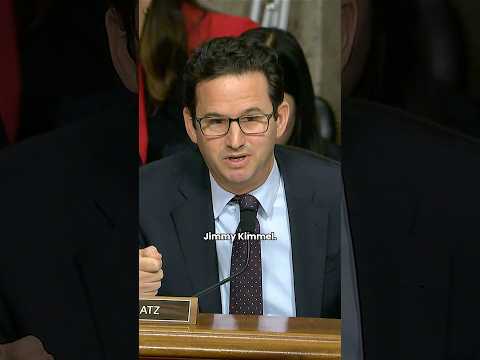
A senator pressed an agency official on whether the Federal Communications Commission has the authority to regulate political satire under the public interest and "news distortion" standards, asking directly, "Do you have jurisdiction or not?"
The agency official answered that the agency "has jurisdiction with respect to the broadcast airwaves" to ensure broadcasters operate in the public interest and noted there are "very specific rules" relating to news distortion. When asked whether a finding that satire was not in the public interest would permit revoking a broadcaster's license, the official replied, "That's not my position at all."
The official framed his role as implementation of laws passed by Congress, saying, "my job is to implement the law passed by congress, and congress has said that broadcast is fundamentally different, that there's a public interest standard." He added that the agency evaluates compliance with public-interest rules rather than policing speech that is merely "offensive or awful."
The senator cited past remarks and public controversy, including references to commentator Jimmy Kimmel, and asked whether the agency had threatened to pull a license; the official denied such a threat and described reports of it as "projection and distortion by Democrats."
The agency official emphasized compliance obligations for broadcasters: "any broadcaster that uses the airways, whether radio or TV, has to comply with the public interest," and said, "Licenses are not sacred cows. You can do things to lose a license." The senator responded by warning that the approach "will not age well" and urged recalibration to align with American practice.
The exchange focused on the limits of regulatory authority and the distinction between offensive speech and content the agency would treat as falling outside the public interest. There was no formal motion or vote in these segments and no named action to revoke a license recorded in the provided transcript.